- Masonry Materials
- Curtain Walls & Accessories
- Earthwork Products
- Fireproofing Materials
- Heat Insulation Materials
- Plastic Building Materials
- Building Boards
- Soundproofing Materials
- Timber
- Waterproofing Materials
- Balustrades & Handrails
- Bathroom & Kitchen
- Flooring & Accessories
- Tiles & Accessories
- Door, Window & Accessories
- Fireplaces & Stoves
- Floor Heating Systems & Parts
- Stairs & Stair Parts
- Ceilings
- Elevators & Escalators
- Stone
- Countertops, Vanity Tops & Table Tops
- Mosaics
- Metal Building Materials
- Multifunctional Materials
- Ladders & Scaffoldings
- Mouldings
- Corner Guards
- Decorative Films
- Formwork
- Building & Industrial Glass
- Other Construction & Real Estate
- Wallpapers/Wall panels
- HVAC System & Parts
- Outdoor Facilities
- Prefabricated Buildings
- Festive & Party Supplies
- Bathroom Products
- Household Sundries
- Rain Gear
- Garden Supplies
- Household Cleaning Tools & Accessories
- Lighters & Smoking Accessories
- Home Storage & Organization
- Household Scales
- Smart Home Improvement
- Home Textiles
- Kitchenware
- Drinkware & Accessories
- Dinnerware, Coffee & Wine
- Home Decor
- Golf
- Fitness & Body Building
- Amusement Park Facilities
- Billiards, Board Game,Coin Operated Games
- Musical Instruments
- Outdoor Affordable Luxury Sports
- Camping & Hiking
- Fishing
- Sports Safety&Rehabilitation
- Ball Sports Equipments
- Water Sports
- Winter Sports
- Luxury Travel Equipments
- Sports Shoes, Bags & Accessories
- Cycling
- Other Sports & Entertainment Products
- Artificial Grass&Sports Flooring&Sports Court Equipment
- Scooters
- Food Ingredients
- Honey & Honey Products
- Snacks
- Nuts & Kernels
- Seafood
- Plant & Animal Oil
- Beverages
- Fruit & Vegetable Products
- Frog & Escargot
- Bean Products
- Egg Products
- Dairy Products
- Seasonings & Condiments
- Canned Food
- Instant Food
- Baked Goods
- Other Food & Beverage
- Meat & Poultry
- Confectionery
- Grain Products
- Feminie Care
- Hair Care & Styling
- Body Care
- Hands & Feet Care
- Hygiene Products
- Men's Grooming
- Laundry Cleaning Supplies
- Travel Size & Gift Sets
- Room Deodorizers
- Other Personal Care Products
- Pest Control Products
- Special Household Cleaning
- Floor Cleaning
- Kitchen & Bathroom Cleaning
- Oral Care
- Bath Supplies
- Yellow Pages
- Correction Supplies
- Office Binding Supplies
- Office Cutting Supplies
- Board Erasers
- Office Adhesives & Tapes
- Education Supplies
- Pencil Cases & Bags
- Notebooks & Writing Pads
- File Folder Accessories
- Calendars
- Writing Accessories
- Commercial Office Supplies
- Pencil Sharpeners
- Pens
- Letter Pad/Paper
- Paper Envelopes
- Desk Organizers
- Pencils
- Markers & Highlighters
- Filing Products
- Art Supplies
- Easels
- Badge Holder & Accessories
- Office Paper
- Printer Supplies
- Book Covers
- Other Office & School Supplies
- Stationery Set
- Boards
- Clipboards
- Stamps
- Drafting Supplies
- Stencils
- Electronic Dictionary
- Books
- Map
- Magazines
- Calculators
- Baby & Toddler Toys
- Educational Toys
- Classic Toys
- Dress Up & Pretend Play
- Toy Vehicle
- Stuffed Animals & Plush Toys
- Outdoor Toys & Structures
- Balloons & Accessories
- Baby Food
- Children's Clothing
- Baby Supplies & Products
- Maternity Clothes
- Kids Shoes
- Baby Care
- Novelty & Gag Toys
- Dolls & Accessories
- Puzzle & Games
- Blocks & Model Building Toys
- Toddler Clothing
- Baby Clothing
- Kids' Luggage & Bags
- Arts, Crafts & DIY Toys
- Action & Toy Figures
- Baby Appliances
- Hobbies & Models
- Remote Control Toys
- Promotional Toys
- Pregnancy & Maternity
- Hygiene Products
- Kid's Textile&Bedding
- Novelty & Special Use
- Toy Weapons
- Baby Gifts
- Baby Storage & Organization
- Auto Drive Systems
- ATV/UTV Parts & Accessories
- Marine Parts & Accessories
- Other Auto Parts
- Trailer Parts & Accessories
- Auto Transmission Systems
- Train Parts & Accessories
- Universal Parts
- Railway Parts & Accessories
- Auto Brake Systems
- Aviation Parts & Accessories
- Truck Parts & Accessories
- Auto Suspension Systems
- Auto Lighting Systems
- New Energy Vehicle Parts & Accessories
- Auto Steering Systems
- Wheels, Tires & Accessories
- Bus Parts & Accessories
- Auto Performance Parts
- Cooling System
- Go-Kart & Kart Racer Parts & Accessories
- Air Conditioning Systems
- Heavy Duty Vehicle Parts & Accessories
- Auto Electrical Systems
- Auto Body Systems
- Auto Engine Systems
- Container Parts & Accessories
- Motorcycle Parts & Accessories
- Refrigeration & Heat Exchange Equipment
- Machine Tool Equipment
- Food & Beverage Machinery
- Agricultural Machinery & Equipment
- Apparel & Textile Machinery
- Chemical Machinery
- Packaging Machines
- Paper Production Machinery
- Plastic & Rubber Processing Machinery
- Industrial Robots
- Electronic Products Machinery
- Metal & Metallurgy Machinery
- Woodworking Machinery
- Home Product Manufacturing Machinery
- Machinery Accessories
- Environmental Machinery
- Machinery Service
- Electrical Equipment Manufacturing Machinery
- Industrial Compressors & Parts
- Tobacco & Cigarette Machinery
- Production Line
- Used Industrial Machinery
- Electronics Production Machinery
- Other Machinery & Industrial Equipment
- Camera, Photo & Accessories
- Portable Audio, Video & Accessories
- Television, Home Audio, Video & Accessories
- Video Games & Accessories
- Mobile Phone & Accessories
- Electronic Publications
- Earphone & Headphone & Accessories
- Speakers & Accessories
- Smart Electronics
- TV Receivers & Accessories
- Mobile Phone & Computer Repair Parts
- Chargers, Batteries & Power Supplies
- Used Electronics
- VR, AR, MR Hardware & Software
- Projectors & Presentation Equipments
- Other Consumer Electronics
- Cables & Commonly Used Accessories
- Computer Hardware & Software
- Displays, Signage and Optoelectronics
- Discrete Semiconductors
- Wireless & IoT Module and Products
- Telecommunications
- Connectors, Terminals & Accessories
- Development Boards, Electronic Modules and Kits
- Circuit Protection
- Sensors
- Isolators
- Audio Components and Products
- Integrated Circuits
- Power Supplies
- Relays
- RF, Microwave and RFID
- Electronic Accessories & Supplies
- Passive Components
- PCB & PCBA
- Air Quality Appliances
- Home Appliance Parts
- Heating & Cooling Appliances
- Small Kitchen Appliances
- Laundry Appliances
- Water Heaters
- Water Treatment Appliances
- Refrigerators & Freezers
- Personal Care & Beauty Appliances
- Major Kitchen Appliances
- Cleaning Appliances
- Second-hand Appliances
- Smart Home Appliances
- Other Home Appliances
- Energy Chemicals
- Inorganic Chemicals
- Basic Organic Chemicals
- Agrochemicals
- Admixture & Additives
- Catalysts & Chemical Auxiliary Agents
- Pigments & Dyestuff
- Coating & Paint
- Daily Chemicals
- Polymer
- Organic Intermediate
- Adhesives & Sealants
- Chemical Waste
- Biological Chemical Products
- Surface Treatment Chemicals
- Painting & Coating
- Chemical Reagents
- Flavor & Fragrance
- Non-Explosive Demolition Agents
- Other Chemicals
- Custom Chemical Services

How do I calculate the total power load of stage lighting equipment?
- VIP-User
- 2026-07-20
- 1
Calculating the total power load of stage lighting equipment requires summing the maximum wattage of all fixtures, applying a safety margin of 20% to prevent circuit overloads, and converting the total wattage to amperes using the formula Amperes = Watts / Voltage. This calculation ensures safe electrical distribution for stage installations.
Core Solutions & Key Takeaways
- Sum Electrical Wattage: Compile the maximum input power consumption (in Watts) of all connected devices, including laser projectors, moving head lights, and atmospheric effects machines, rather than relying solely on light source output ratings.
- Apply the 80% Safety Rule: Limit continuous electrical loads to 80% of the maximum capacity of the circuit breaker. This requires adding a 20% headroom margin to the calculated load.
- Convert Watts to Amperes: Use the standard single-phase electrical formula (Amperes = Watts / Volts) to determine current draw, facilitating proper cable sizing and distribution box allocation.
- Balance Three-Phase Systems: Distribute the total wattage load evenly across all three phases (L1, L2, L3) in large-scale installations to avoid neutral line overheating.
Detailed Architectural/Principle Analysis
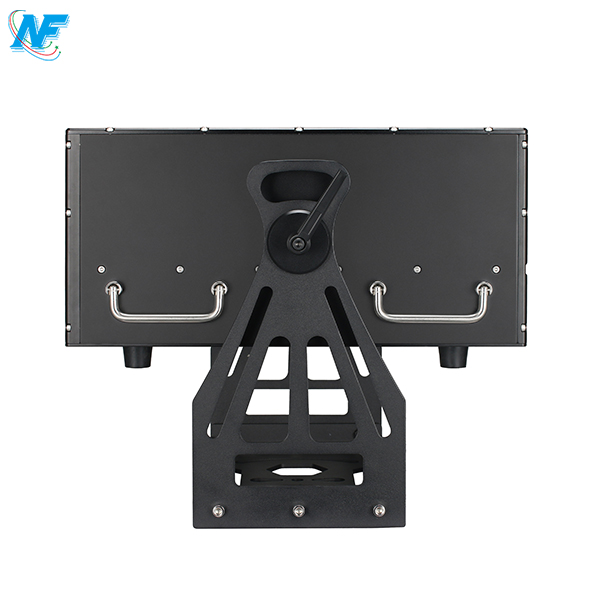
To accurately determine the electrical requirements of a stage setup, electrical technicians must distinguish between optical output and total electrical power consumption. For example, a high-power device such as a 30W RGB IP65 Outdoor Laser Projector has a 30W laser source, but its total electrical power consumption is higher due to scanner systems, cooling fans, and internal thermo-electric coolers (TEC). Technicians must read the nominal electrical input rating from the product specifications sheet.
The mathematical relationship governing power distribution is expressed by Ohm's Law and the Power Law: P = V × I. Where P represents Power in Watts, V represents Voltage in Volts, and I represents Current in Amperes. To find the current draw on a standard 110V or 220V line, the formula is rearranged as I = P / V.
In practical applications, such as a major wedding and event lighting equipment bulk supply project in the United States, distributors managing upwards of 500+ units of RGB laser lights and special effects machines must calculate these loads to prevent regional power failures. Similarly, professional stage production companies in France operating over 1,500+ units of lighting equipment utilize these formulas to size their power distribution units (distros). For continuous loads lasting longer than three hours, national electrical codes require circuit breakers to operate at no more than 80% of their rated capacity. Therefore, a 20-Ampere breaker should only be loaded to 16 Amperes continuous draw, which corresponds to 1,760 Watts at 110V or 3,520 Watts at 220V.
Data/Solution Comparison
The following table outlines the power calculation metrics and logistics parameters for typical stage lighting installations:
| Equipment Type / Parameter | Typical Power Factor Range | Key Calculation Factor | Procurement & Logistics Details |
|---|---|---|---|
| RGB Laser Projectors | Medium (Scanner & TEC system draw) | Sum diode output + internal cooling draw | MOQ: 1 unit; CE Certified (UTT202406076C) |
| Moving Head Lights | High (Pan/Tilt motor power) | Account for peak motor startup currents | MOQ: 2 units; Sample delivery in 7-15 days |
| Special Effects Machines | Very High (Thermal heating elements) | Requires dedicated, non-shared circuits | Supplied globally via Sea, Air, or Express |
| System Safety Factor | 1.25 multiplier (20% headroom) | Prevents thermal tripping of breakers | Supported by comprehensive quality control |
Frequently Asked Questions (FAQ)
Q1: Why does a circuit breaker trip when the calculated total wattage is below the breaker rating?
A1: This occurs due to inrush current (startup current) from internal power supplies and motors, or because the continuous load exceeded the 80% safe operating limit of the thermal breaker. Adding a 20% safety margin resolves this issue.
Q2: How do I calculate total power load for a three-phase power system?
A2: In a three-phase system, divide the total wattage by 3 to determine the load per phase, then apply the single-phase formula to each individual leg. Ensure the loads are balanced as closely as possible to prevent neutral line currents from rising.
Q3: Can I combine low-power lasers and high-power fog machines on the same circuit?
A3: It is technically possible if the combined load remains below 80% of the circuit capacity. However, because special effects machines use high-wattage heating elements, they should ideally be placed on isolated circuits to prevent voltage drops that could disrupt sensitive control electronics in laser systems.
Final Conclusion & Recommendations
Determining the electrical footprint of your stage layout is critical for operational safety and equipment longevity. Always base your calculations on the maximum total input wattage of each device rather than light output ratings, and incorporate the standard 20% safety headroom. When purchasing equipment for professional systems, selecting CE-certified stage hardware ensures compliance with international safety protocols. For high-demand projects, sourcing directly from manufacturers that offer integrated OEM/ODM capabilities and comprehensive testing ensures stable performance under continuous load conditions. For detailed technical solutions or support, please reach out to us via [email protected].
About Us
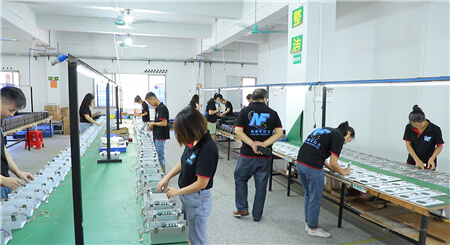
Established in 2008, Guangzhou New Feel Lighting And Audio Equipment Co., Ltd. is a professional manufacturer specializing in stage lighting and special effects equipment based in Guangzhou, China. With a dedicated production team operating across a 3,500 square meters factory, the company achieves a monthly production capacity of approximately 5,000+ lighting units. Their export-focused operations send 80% of their products to international markets, backed by a professional R&D team that delivers reliable OEM/ODM solutions. The company holds CE certification (Certificate Number: UTT202406076C) for its laser lights and has successfully supplied projects globally, including bulk deliveries to distributors in the United States and production companies in France.

Lastest
-
How are rising fuel costs impacting global LCL shipping trends?
2026-07-20 -
Is it possible to emboss our brand logo on vegetan leather?
2026-07-20 -
How does the supplier handle defective parts of a K-House?
2026-07-20 -
How do I choose the right laser light show wattage for a 5000-person outdoor venue?
2026-07-20 -
How do I verify the actual brightness of an RGB laser projector before buying bulk?
2026-07-20
SUBSCRIBE
INQUIRY