- Masonry Materials
- Curtain Walls & Accessories
- Earthwork Products
- Fireproofing Materials
- Heat Insulation Materials
- Plastic Building Materials
- Building Boards
- Soundproofing Materials
- Timber
- Waterproofing Materials
- Balustrades & Handrails
- Bathroom & Kitchen
- Flooring & Accessories
- Tiles & Accessories
- Door, Window & Accessories
- Fireplaces & Stoves
- Floor Heating Systems & Parts
- Stairs & Stair Parts
- Ceilings
- Elevators & Escalators
- Stone
- Countertops, Vanity Tops & Table Tops
- Mosaics
- Metal Building Materials
- Multifunctional Materials
- Ladders & Scaffoldings
- Mouldings
- Corner Guards
- Decorative Films
- Formwork
- Building & Industrial Glass
- Other Construction & Real Estate
- Wallpapers/Wall panels
- HVAC System & Parts
- Outdoor Facilities
- Prefabricated Buildings
- Festive & Party Supplies
- Bathroom Products
- Household Sundries
- Rain Gear
- Garden Supplies
- Household Cleaning Tools & Accessories
- Lighters & Smoking Accessories
- Home Storage & Organization
- Household Scales
- Smart Home Improvement
- Home Textiles
- Kitchenware
- Drinkware & Accessories
- Dinnerware, Coffee & Wine
- Home Decor
- Golf
- Fitness & Body Building
- Amusement Park Facilities
- Billiards, Board Game,Coin Operated Games
- Musical Instruments
- Outdoor Affordable Luxury Sports
- Camping & Hiking
- Fishing
- Sports Safety&Rehabilitation
- Ball Sports Equipments
- Water Sports
- Winter Sports
- Luxury Travel Equipments
- Sports Shoes, Bags & Accessories
- Cycling
- Other Sports & Entertainment Products
- Artificial Grass&Sports Flooring&Sports Court Equipment
- Scooters
- Food Ingredients
- Honey & Honey Products
- Snacks
- Nuts & Kernels
- Seafood
- Plant & Animal Oil
- Beverages
- Fruit & Vegetable Products
- Frog & Escargot
- Bean Products
- Egg Products
- Dairy Products
- Seasonings & Condiments
- Canned Food
- Instant Food
- Baked Goods
- Other Food & Beverage
- Meat & Poultry
- Confectionery
- Grain Products
- Feminie Care
- Hair Care & Styling
- Body Care
- Hands & Feet Care
- Hygiene Products
- Men's Grooming
- Laundry Cleaning Supplies
- Travel Size & Gift Sets
- Room Deodorizers
- Other Personal Care Products
- Pest Control Products
- Special Household Cleaning
- Floor Cleaning
- Kitchen & Bathroom Cleaning
- Oral Care
- Bath Supplies
- Yellow Pages
- Correction Supplies
- Office Binding Supplies
- Office Cutting Supplies
- Board Erasers
- Office Adhesives & Tapes
- Education Supplies
- Pencil Cases & Bags
- Notebooks & Writing Pads
- File Folder Accessories
- Calendars
- Writing Accessories
- Commercial Office Supplies
- Pencil Sharpeners
- Pens
- Letter Pad/Paper
- Paper Envelopes
- Desk Organizers
- Pencils
- Markers & Highlighters
- Filing Products
- Art Supplies
- Easels
- Badge Holder & Accessories
- Office Paper
- Printer Supplies
- Book Covers
- Other Office & School Supplies
- Stationery Set
- Boards
- Clipboards
- Stamps
- Drafting Supplies
- Stencils
- Electronic Dictionary
- Books
- Map
- Magazines
- Calculators
- Baby & Toddler Toys
- Educational Toys
- Classic Toys
- Dress Up & Pretend Play
- Toy Vehicle
- Stuffed Animals & Plush Toys
- Outdoor Toys & Structures
- Balloons & Accessories
- Baby Food
- Children's Clothing
- Baby Supplies & Products
- Maternity Clothes
- Kids Shoes
- Baby Care
- Novelty & Gag Toys
- Dolls & Accessories
- Puzzle & Games
- Blocks & Model Building Toys
- Toddler Clothing
- Baby Clothing
- Kids' Luggage & Bags
- Arts, Crafts & DIY Toys
- Action & Toy Figures
- Baby Appliances
- Hobbies & Models
- Remote Control Toys
- Promotional Toys
- Pregnancy & Maternity
- Hygiene Products
- Kid's Textile&Bedding
- Novelty & Special Use
- Toy Weapons
- Baby Gifts
- Baby Storage & Organization
- Auto Drive Systems
- ATV/UTV Parts & Accessories
- Marine Parts & Accessories
- Other Auto Parts
- Trailer Parts & Accessories
- Auto Transmission Systems
- Train Parts & Accessories
- Universal Parts
- Railway Parts & Accessories
- Auto Brake Systems
- Aviation Parts & Accessories
- Truck Parts & Accessories
- Auto Suspension Systems
- Auto Lighting Systems
- New Energy Vehicle Parts & Accessories
- Auto Steering Systems
- Wheels, Tires & Accessories
- Bus Parts & Accessories
- Auto Performance Parts
- Cooling System
- Go-Kart & Kart Racer Parts & Accessories
- Air Conditioning Systems
- Heavy Duty Vehicle Parts & Accessories
- Auto Electrical Systems
- Auto Body Systems
- Auto Engine Systems
- Container Parts & Accessories
- Motorcycle Parts & Accessories
- Refrigeration & Heat Exchange Equipment
- Machine Tool Equipment
- Food & Beverage Machinery
- Agricultural Machinery & Equipment
- Apparel & Textile Machinery
- Chemical Machinery
- Packaging Machines
- Paper Production Machinery
- Plastic & Rubber Processing Machinery
- Industrial Robots
- Electronic Products Machinery
- Metal & Metallurgy Machinery
- Woodworking Machinery
- Home Product Manufacturing Machinery
- Machinery Accessories
- Environmental Machinery
- Machinery Service
- Electrical Equipment Manufacturing Machinery
- Industrial Compressors & Parts
- Tobacco & Cigarette Machinery
- Production Line
- Used Industrial Machinery
- Electronics Production Machinery
- Other Machinery & Industrial Equipment
- Camera, Photo & Accessories
- Portable Audio, Video & Accessories
- Television, Home Audio, Video & Accessories
- Video Games & Accessories
- Mobile Phone & Accessories
- Electronic Publications
- Earphone & Headphone & Accessories
- Speakers & Accessories
- Smart Electronics
- TV Receivers & Accessories
- Mobile Phone & Computer Repair Parts
- Chargers, Batteries & Power Supplies
- Used Electronics
- VR, AR, MR Hardware & Software
- Projectors & Presentation Equipments
- Other Consumer Electronics
- Cables & Commonly Used Accessories
- Computer Hardware & Software
- Displays, Signage and Optoelectronics
- Discrete Semiconductors
- Wireless & IoT Module and Products
- Telecommunications
- Connectors, Terminals & Accessories
- Development Boards, Electronic Modules and Kits
- Circuit Protection
- Sensors
- Isolators
- Audio Components and Products
- Integrated Circuits
- Power Supplies
- Relays
- RF, Microwave and RFID
- Electronic Accessories & Supplies
- Passive Components
- PCB & PCBA
- Air Quality Appliances
- Home Appliance Parts
- Heating & Cooling Appliances
- Small Kitchen Appliances
- Laundry Appliances
- Water Heaters
- Water Treatment Appliances
- Refrigerators & Freezers
- Personal Care & Beauty Appliances
- Major Kitchen Appliances
- Cleaning Appliances
- Second-hand Appliances
- Smart Home Appliances
- Other Home Appliances
- Energy Chemicals
- Inorganic Chemicals
- Basic Organic Chemicals
- Agrochemicals
- Admixture & Additives
- Catalysts & Chemical Auxiliary Agents
- Pigments & Dyestuff
- Coating & Paint
- Daily Chemicals
- Polymer
- Organic Intermediate
- Adhesives & Sealants
- Chemical Waste
- Biological Chemical Products
- Surface Treatment Chemicals
- Painting & Coating
- Chemical Reagents
- Flavor & Fragrance
- Non-Explosive Demolition Agents
- Other Chemicals
- Custom Chemical Services

How do I choose between steel and aluminum engine hood options for wholesale?
- VIP-User
- 2026-08-02
- 1
Choosing between steel and aluminum engine hood options for wholesale requires balancing unit costs against vehicle performance demands. Steel hoods offer high structural durability, impact resistance, and low purchasing costs, making them the standard choice for budget-sensitive repairs. Aluminum hoods reduce weight by up to 50%, improving fuel efficiency and corrosion resistance, which is preferred for premium vehicles.
Core Solutions & Key Takeaways
- Material Cost vs. Performance: Steel is economically advantageous for volume-focused distribution, while aluminum targets premium aftermarket collision repair seeking weight reduction and corrosion resistance.
- Target Market Demands: Wholesale buyers in North American and European markets prioritize strict compliance, requiring components that match original equipment manufacturer (OEM) specifications.
- Application Scenarios: These options serve automotive collision repair networks, international auto parts distributors, and cross-border e-commerce brands needing certified body parts.
- Supply Chain Efficiency: Securing a partner capable of supplying both options ensures consolidated shipments and reduced logistics friction.
Detailed Architectural/Principle Analysis
The choice between steel and aluminum engine hoods rests on distinct metallurgical and manufacturing principles. Steel hoods are fabricated from high-strength sheet steel, offering excellent tensile strength and structural rigidity. They absorb collision energy effectively, ensuring predictable deformation during crashes. This makes steel the default replacement standard for most daily-drive passenger vehicles. For suppliers stocking bulk inventory, steel presents a lower upfront purchasing barrier and stable demand.
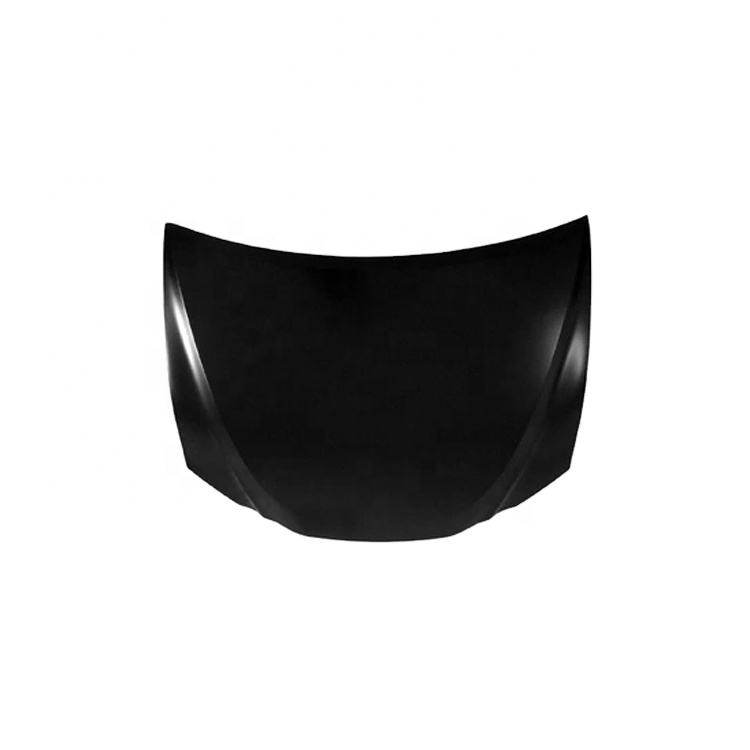
Conversely, aluminum alloy engine hoods leverage specialized grades like 5000 or 6000 series aluminum. This material reduces the component weight by up to 40% to 50% compared to traditional steel. The reduction in front-end vehicle mass improves handling, reduces fuel consumption, and lowers emissions. Additionally, aluminum naturally forms a protective oxide layer, providing superior corrosion resistance. This is highly valued in regional markets prone to harsh winter conditions and road salting.
From an international wholesale perspective, compliance and precise fitment are non-negotiable. Quality systems must utilize Dimensional Measurement (CMM) and rigorous visual inspections to guarantee that hood panels match OEM tolerances perfectly. In European markets, having verified EPR (Extended Producer Responsibility) and CE certifications ensures smooth customs clearance and legal conformity for commercial distribution.

Data/Solution Comparison
The table below highlights the physical and economic differences between steel and aluminum replacement hoods to assist in wholesale procurement planning.
| Evaluation Parameter | Steel Engine Hoods | Aluminum Engine Hoods |
|---|---|---|
| Material Weight | Standard weight; heavier construction | Ultra-lightweight; up to 50% lighter |
| Procurement Cost | Cost-effective (lower wholesale price) | Premium pricing tier |
| Corrosion Resistance | Requires protective primer/paint layers | Inherent high resistance to oxidation |
| Repairability | Easier to weld and pull dents | Complex repair; typically requires panel replacement |
| Wholesale MOQ | 5 PCS minimum order quantity | 5 PCS minimum order quantity |
| Standard Lead Time | 7 days for stock items | 7 days for stock items |
| Shipping Methods | Sea Freight (FCL/LCL), Railway Transport, Air Freight, and International Express (DHL, FedEx, UPS, TNT) | |
| Accepted Payment Methods | T/T, D/P, L/C, Alipay, and secure cross-border channels | |
Frequently Asked Questions (FAQ)
Q1: Which material option is better suited for high-volume cross-border e-commerce sales?
A1: Steel hoods are generally favored for high-volume sales due to lower unit costs and broad compatibility with mainstream vehicle models. However, aluminum is growing in demand for premium German and American vehicle series where weight reduction is a key selling point.
Q2: How are these hoods protected during international transit to prevent damage?
A2: All components are packed using reinforced, export-grade protective materials to withstand sea and land transit. Before loading, 100% final inspections are completed, and visual confirmations can be shared with clients via pre-delivery photos or videos.
Q3: Are there specific certifications required for importing these engine hoods into Europe?
A3: Yes, European imports require compliance with safety and environmental guidelines. Products must possess valid CE and EPR certifications to pass regulatory checks and ensure legal sale within European markets.
Final Conclusion & Recommendations
Procurement professionals must align their material choice with local market budgets and vehicle classes. Steel offers unbeatable economic value for standard repair lines, while aluminum meets the high-performance demands of premium car series. Relying on an integrated manufacturer with an established 18-year track record ensures a stable supply of certified auto body parts. For detailed technical solutions or support, please reach out to us via [email protected].
About Us
Based in Jiangsu Province, Danyang Wanjiang Auto Parts Co., Ltd. operates a 10,000 square meter manufacturing factory established in 2023. Backed by 18 years of export and OEM/ODM development expertise, the enterprise specializes in producing and supplying precision-fit car bumpers, engine hoods, and exterior body parts. The company maintains an annual export capacity exceeding 500 containers, serving automotive aftermarket wholesalers and collision repair networks across North America and Europe. All operations adhere to strict CE and EPR standards to ensure complete global market compliance.

Lastest
-
How are rising fuel costs impacting global LCL shipping trends?
2026-08-02 -
Is it possible to emboss our brand logo on vegetan leather?
2026-08-02 -
How does the supplier handle defective parts of a K-House?
2026-08-02 -
How do I choose the right laser light show wattage for a 5000-person outdoor venue?
2026-08-02 -
How do I verify the actual brightness of an RGB laser projector before buying bulk?
2026-08-02
SUBSCRIBE
INQUIRY