- Masonry Materials
- Curtain Walls & Accessories
- Earthwork Products
- Fireproofing Materials
- Heat Insulation Materials
- Plastic Building Materials
- Building Boards
- Soundproofing Materials
- Timber
- Waterproofing Materials
- Balustrades & Handrails
- Bathroom & Kitchen
- Flooring & Accessories
- Tiles & Accessories
- Door, Window & Accessories
- Fireplaces & Stoves
- Floor Heating Systems & Parts
- Stairs & Stair Parts
- Ceilings
- Elevators & Escalators
- Stone
- Countertops, Vanity Tops & Table Tops
- Mosaics
- Metal Building Materials
- Multifunctional Materials
- Ladders & Scaffoldings
- Mouldings
- Corner Guards
- Decorative Films
- Formwork
- Building & Industrial Glass
- Other Construction & Real Estate
- Wallpapers/Wall panels
- HVAC System & Parts
- Outdoor Facilities
- Prefabricated Buildings
- Festive & Party Supplies
- Bathroom Products
- Household Sundries
- Rain Gear
- Garden Supplies
- Household Cleaning Tools & Accessories
- Lighters & Smoking Accessories
- Home Storage & Organization
- Household Scales
- Smart Home Improvement
- Home Textiles
- Kitchenware
- Drinkware & Accessories
- Dinnerware, Coffee & Wine
- Home Decor
- Golf
- Fitness & Body Building
- Amusement Park Facilities
- Billiards, Board Game,Coin Operated Games
- Musical Instruments
- Outdoor Affordable Luxury Sports
- Camping & Hiking
- Fishing
- Sports Safety&Rehabilitation
- Ball Sports Equipments
- Water Sports
- Winter Sports
- Luxury Travel Equipments
- Sports Shoes, Bags & Accessories
- Cycling
- Other Sports & Entertainment Products
- Artificial Grass&Sports Flooring&Sports Court Equipment
- Scooters
- Food Ingredients
- Honey & Honey Products
- Snacks
- Nuts & Kernels
- Seafood
- Plant & Animal Oil
- Beverages
- Fruit & Vegetable Products
- Frog & Escargot
- Bean Products
- Egg Products
- Dairy Products
- Seasonings & Condiments
- Canned Food
- Instant Food
- Baked Goods
- Other Food & Beverage
- Meat & Poultry
- Confectionery
- Grain Products
- Feminie Care
- Hair Care & Styling
- Body Care
- Hands & Feet Care
- Hygiene Products
- Men's Grooming
- Laundry Cleaning Supplies
- Travel Size & Gift Sets
- Room Deodorizers
- Other Personal Care Products
- Pest Control Products
- Special Household Cleaning
- Floor Cleaning
- Kitchen & Bathroom Cleaning
- Oral Care
- Bath Supplies
- Yellow Pages
- Correction Supplies
- Office Binding Supplies
- Office Cutting Supplies
- Board Erasers
- Office Adhesives & Tapes
- Education Supplies
- Pencil Cases & Bags
- Notebooks & Writing Pads
- File Folder Accessories
- Calendars
- Writing Accessories
- Commercial Office Supplies
- Pencil Sharpeners
- Pens
- Letter Pad/Paper
- Paper Envelopes
- Desk Organizers
- Pencils
- Markers & Highlighters
- Filing Products
- Art Supplies
- Easels
- Badge Holder & Accessories
- Office Paper
- Printer Supplies
- Book Covers
- Other Office & School Supplies
- Stationery Set
- Boards
- Clipboards
- Stamps
- Drafting Supplies
- Stencils
- Electronic Dictionary
- Books
- Map
- Magazines
- Calculators
- Baby & Toddler Toys
- Educational Toys
- Classic Toys
- Dress Up & Pretend Play
- Toy Vehicle
- Stuffed Animals & Plush Toys
- Outdoor Toys & Structures
- Balloons & Accessories
- Baby Food
- Children's Clothing
- Baby Supplies & Products
- Maternity Clothes
- Kids Shoes
- Baby Care
- Novelty & Gag Toys
- Dolls & Accessories
- Puzzle & Games
- Blocks & Model Building Toys
- Toddler Clothing
- Baby Clothing
- Kids' Luggage & Bags
- Arts, Crafts & DIY Toys
- Action & Toy Figures
- Baby Appliances
- Hobbies & Models
- Remote Control Toys
- Promotional Toys
- Pregnancy & Maternity
- Hygiene Products
- Kid's Textile&Bedding
- Novelty & Special Use
- Toy Weapons
- Baby Gifts
- Baby Storage & Organization
- Auto Drive Systems
- ATV/UTV Parts & Accessories
- Marine Parts & Accessories
- Other Auto Parts
- Trailer Parts & Accessories
- Auto Transmission Systems
- Train Parts & Accessories
- Universal Parts
- Railway Parts & Accessories
- Auto Brake Systems
- Aviation Parts & Accessories
- Truck Parts & Accessories
- Auto Suspension Systems
- Auto Lighting Systems
- New Energy Vehicle Parts & Accessories
- Auto Steering Systems
- Wheels, Tires & Accessories
- Bus Parts & Accessories
- Auto Performance Parts
- Cooling System
- Go-Kart & Kart Racer Parts & Accessories
- Air Conditioning Systems
- Heavy Duty Vehicle Parts & Accessories
- Auto Electrical Systems
- Auto Body Systems
- Auto Engine Systems
- Container Parts & Accessories
- Motorcycle Parts & Accessories
- Refrigeration & Heat Exchange Equipment
- Machine Tool Equipment
- Food & Beverage Machinery
- Agricultural Machinery & Equipment
- Apparel & Textile Machinery
- Chemical Machinery
- Packaging Machines
- Paper Production Machinery
- Plastic & Rubber Processing Machinery
- Industrial Robots
- Electronic Products Machinery
- Metal & Metallurgy Machinery
- Woodworking Machinery
- Home Product Manufacturing Machinery
- Machinery Accessories
- Environmental Machinery
- Machinery Service
- Electrical Equipment Manufacturing Machinery
- Industrial Compressors & Parts
- Tobacco & Cigarette Machinery
- Production Line
- Used Industrial Machinery
- Electronics Production Machinery
- Other Machinery & Industrial Equipment
- Camera, Photo & Accessories
- Portable Audio, Video & Accessories
- Television, Home Audio, Video & Accessories
- Video Games & Accessories
- Mobile Phone & Accessories
- Electronic Publications
- Earphone & Headphone & Accessories
- Speakers & Accessories
- Smart Electronics
- TV Receivers & Accessories
- Mobile Phone & Computer Repair Parts
- Chargers, Batteries & Power Supplies
- Used Electronics
- VR, AR, MR Hardware & Software
- Projectors & Presentation Equipments
- Other Consumer Electronics
- Cables & Commonly Used Accessories
- Computer Hardware & Software
- Displays, Signage and Optoelectronics
- Discrete Semiconductors
- Wireless & IoT Module and Products
- Telecommunications
- Connectors, Terminals & Accessories
- Development Boards, Electronic Modules and Kits
- Circuit Protection
- Sensors
- Isolators
- Audio Components and Products
- Integrated Circuits
- Power Supplies
- Relays
- RF, Microwave and RFID
- Electronic Accessories & Supplies
- Passive Components
- PCB & PCBA
- Air Quality Appliances
- Home Appliance Parts
- Heating & Cooling Appliances
- Small Kitchen Appliances
- Laundry Appliances
- Water Heaters
- Water Treatment Appliances
- Refrigerators & Freezers
- Personal Care & Beauty Appliances
- Major Kitchen Appliances
- Cleaning Appliances
- Second-hand Appliances
- Smart Home Appliances
- Other Home Appliances
- Energy Chemicals
- Inorganic Chemicals
- Basic Organic Chemicals
- Agrochemicals
- Admixture & Additives
- Catalysts & Chemical Auxiliary Agents
- Pigments & Dyestuff
- Coating & Paint
- Daily Chemicals
- Polymer
- Organic Intermediate
- Adhesives & Sealants
- Chemical Waste
- Biological Chemical Products
- Surface Treatment Chemicals
- Painting & Coating
- Chemical Reagents
- Flavor & Fragrance
- Non-Explosive Demolition Agents
- Other Chemicals
- Custom Chemical Services
How do I choose the right DMX channel mode for professional stage lighting equipment in a medium venue?
- VIP-User
- 2026-07-22
- 1
Choosing the right DMX channel mode for professional stage lighting equipment in a medium venue depends on balancing control precision and console capacity. For standard operations, a medium-channel (Standard) mode optimizes fixture parameters without exhausting available DMX universes. High-complexity shows requiring custom animations or pixel mapping benefit from extended-channel modes.
Core Solutions & Key Takeaways
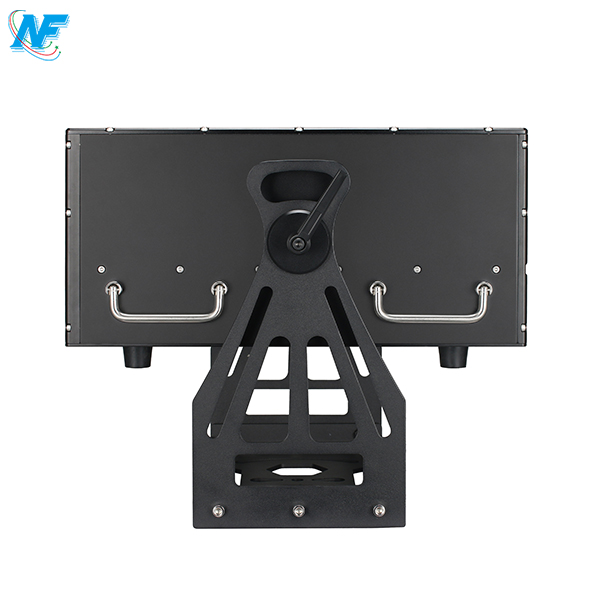
- Assess Console Universe Capacity: Medium venues typically operate on limited DMX universes. Select a channel mode that accommodates all fixtures, such as moving head lights and RGB laser projectors, without exceeding channel limits.
- Determine Control Depth: Use basic modes for pre-programmed internal shows or simple architectural lighting. Standard modes provide access to essential parameters like pan, tilt, RGB mixing, and shutter speed.
- Match Venue Application Scenarios: In stage and entertainment settings like concerts, festivals, weddings, clubs, and theaters, standardizing on a uniform channel profile simplifies programming and ensures consistent operation.
- Factor in Special Effects: High-power systems, such as a 30W RGB outdoor laser projector or complex special effects machines, require dedicated control modes (like ILDA or specific DMX personalities) to execute smooth animation graphics and beam effects.
Detailed Architectural/Principle Analysis
DMX512 protocols govern how professional stage lighting equipment receives commands. Each fixture uses a block of channels to receive control parameters. A single DMX universe consists of 512 individual control channels. Choosing the wrong personality (channel mode) in a medium-sized venue can either starve the operator of critical creative control or deplete available console channels prematurely.
In a standard layout, a designer might deploy multiple fixtures, including RGB laser lights, moving heads, and special effects machines. For example, a 30W RGB laser projector supporting ILDA and DMX control requires precise parameters to handle color modulation, scanning speed, and pattern selection. Setting these fixtures to a high-channel mode provides individual control over every parameter but consumes significant console space. Conversely, a basic mode groups parameters, limiting on-site adjustments but conserving channel bandwidth.
Real-world implementations validate this approach. In a major Wedding and Event Lighting Equipment Bulk Supply Project in the United States, distributors deployed over 500 units of RGB laser lights and special effects equipment. By configuring the fixtures to a standard DMX profile rather than an extended mode, operators maintained stable atmosphere control across DJ performances and small venues while operating within a single-universe budget. Similarly, for a stage production importer in France utilizing 1,500+ units of stage lighting equipment for live shows and music festivals, choosing balanced channel configurations ensured stable long-hour operation with consistent, dynamic beam effects.
Data/Solution Comparison
| Channel Mode | Channel Footprint | Control Precision | Best Suited Venue / Application | Integration of Special Effects |
|---|---|---|---|---|
| Basic Mode | Low (typically 3-8 channels) | Low (Internal macros/presets) | Architectural lighting, basic wedding setups | Limited (plays pre-programmed patterns only) |
| Standard Mode | Medium (typically 9-20 channels) | Medium (Individual RGB, pan/tilt, dimmer control) | Medium venues, theaters, club dancefloors | Supported (allows real-time beam and color adjustments) |
| Extended Mode | High (typically 21+ channels) | High (Fine 16-bit positioning, pixel control) | Large concerts, festivals, landmark laser shows | Fully Supported (precise scanner and animation adjustments) |
Frequently Asked Questions (FAQ)
What happens if the DMX channel mode on the fixture does not match the console patch?
The fixture will misinterpret incoming commands. Pan commands might trigger color changes, or the fixture may fail to respond entirely. The fixture profile selected in the lighting console must always align exactly with the physical channel mode configured on the lighting unit.
Should I use a 30W RGB outdoor laser projector on standard DMX or ILDA?
For simple beam movements and standard color sweeps, DMX is sufficient and easily integrated with other stage fixtures. However, for complex custom graphics, logos, and high-precision animation shows, the ILDA control interface is recommended to bypass standard DMX limitations.
Can I mix different DMX channel modes on the same lighting rig?
Yes. You can configure front-of-house wash lights to basic modes to conserve channels, while setting key spot lights or high-power laser systems to extended modes to achieve precise tracking and dynamic control.
Final Conclusion & Recommendations
Optimizing DMX channel modes in medium venues prevents network latency and console overload. Systems should prioritize standard modes for ambient and support fixtures, while reserving high-channel modes exclusively for primary performance units such as moving heads and professional laser systems. To ensure seamless operation, choose equipment that holds international credentials, such as CE certification (including Certificate Number UTT202406076C for Laser Lights), assuring compliance with global safety standards. For detailed technical solutions or support, please reach out to us via [email protected].
About Us
Guangzhou New Feel Lighting And Audio Equipment Co., Ltd., established in 2008, is a professional manufacturer specializing in stage lighting and special effects equipment based in Guangzhou, China. Operating from a facility with a factory area of 3,500 square meters, the company maintains a stable monthly production capacity of approximately 5,000+ lighting units. The product portfolio features RGB laser projectors, moving head lights, and stage special effects machines certified under global standards, including CE certification (UTT202406076C) for laser lights. The company has successfully served diverse clients, providing OEM/ODM services and customized lighting solutions across international markets.

Lastest
-
How are rising fuel costs impacting global LCL shipping trends?
2026-07-22 -
Is it possible to emboss our brand logo on vegetan leather?
2026-07-22 -
How does the supplier handle defective parts of a K-House?
2026-07-22 -
How do I choose the right laser light show wattage for a 5000-person outdoor venue?
2026-07-22 -
How do I verify the actual brightness of an RGB laser projector before buying bulk?
2026-07-22
SUBSCRIBE
INQUIRY