- Masonry Materials
- Curtain Walls & Accessories
- Earthwork Products
- Fireproofing Materials
- Heat Insulation Materials
- Plastic Building Materials
- Building Boards
- Soundproofing Materials
- Timber
- Waterproofing Materials
- Balustrades & Handrails
- Bathroom & Kitchen
- Flooring & Accessories
- Tiles & Accessories
- Door, Window & Accessories
- Fireplaces & Stoves
- Floor Heating Systems & Parts
- Stairs & Stair Parts
- Ceilings
- Elevators & Escalators
- Stone
- Countertops, Vanity Tops & Table Tops
- Mosaics
- Metal Building Materials
- Multifunctional Materials
- Ladders & Scaffoldings
- Mouldings
- Corner Guards
- Decorative Films
- Formwork
- Building & Industrial Glass
- Other Construction & Real Estate
- Wallpapers/Wall panels
- HVAC System & Parts
- Outdoor Facilities
- Prefabricated Buildings
- Festive & Party Supplies
- Bathroom Products
- Household Sundries
- Rain Gear
- Garden Supplies
- Household Cleaning Tools & Accessories
- Lighters & Smoking Accessories
- Home Storage & Organization
- Household Scales
- Smart Home Improvement
- Home Textiles
- Kitchenware
- Drinkware & Accessories
- Dinnerware, Coffee & Wine
- Home Decor
- Golf
- Fitness & Body Building
- Amusement Park Facilities
- Billiards, Board Game,Coin Operated Games
- Musical Instruments
- Outdoor Affordable Luxury Sports
- Camping & Hiking
- Fishing
- Sports Safety&Rehabilitation
- Ball Sports Equipments
- Water Sports
- Winter Sports
- Luxury Travel Equipments
- Sports Shoes, Bags & Accessories
- Cycling
- Other Sports & Entertainment Products
- Artificial Grass&Sports Flooring&Sports Court Equipment
- Scooters
- Food Ingredients
- Honey & Honey Products
- Snacks
- Nuts & Kernels
- Seafood
- Plant & Animal Oil
- Beverages
- Fruit & Vegetable Products
- Frog & Escargot
- Bean Products
- Egg Products
- Dairy Products
- Seasonings & Condiments
- Canned Food
- Instant Food
- Baked Goods
- Other Food & Beverage
- Meat & Poultry
- Confectionery
- Grain Products
- Feminie Care
- Hair Care & Styling
- Body Care
- Hands & Feet Care
- Hygiene Products
- Men's Grooming
- Laundry Cleaning Supplies
- Travel Size & Gift Sets
- Room Deodorizers
- Other Personal Care Products
- Pest Control Products
- Special Household Cleaning
- Floor Cleaning
- Kitchen & Bathroom Cleaning
- Oral Care
- Bath Supplies
- Yellow Pages
- Correction Supplies
- Office Binding Supplies
- Office Cutting Supplies
- Board Erasers
- Office Adhesives & Tapes
- Education Supplies
- Pencil Cases & Bags
- Notebooks & Writing Pads
- File Folder Accessories
- Calendars
- Writing Accessories
- Commercial Office Supplies
- Pencil Sharpeners
- Pens
- Letter Pad/Paper
- Paper Envelopes
- Desk Organizers
- Pencils
- Markers & Highlighters
- Filing Products
- Art Supplies
- Easels
- Badge Holder & Accessories
- Office Paper
- Printer Supplies
- Book Covers
- Other Office & School Supplies
- Stationery Set
- Boards
- Clipboards
- Stamps
- Drafting Supplies
- Stencils
- Electronic Dictionary
- Books
- Map
- Magazines
- Calculators
- Baby & Toddler Toys
- Educational Toys
- Classic Toys
- Dress Up & Pretend Play
- Toy Vehicle
- Stuffed Animals & Plush Toys
- Outdoor Toys & Structures
- Balloons & Accessories
- Baby Food
- Children's Clothing
- Baby Supplies & Products
- Maternity Clothes
- Kids Shoes
- Baby Care
- Novelty & Gag Toys
- Dolls & Accessories
- Puzzle & Games
- Blocks & Model Building Toys
- Toddler Clothing
- Baby Clothing
- Kids' Luggage & Bags
- Arts, Crafts & DIY Toys
- Action & Toy Figures
- Baby Appliances
- Hobbies & Models
- Remote Control Toys
- Promotional Toys
- Pregnancy & Maternity
- Hygiene Products
- Kid's Textile&Bedding
- Novelty & Special Use
- Toy Weapons
- Baby Gifts
- Baby Storage & Organization
- Auto Drive Systems
- ATV/UTV Parts & Accessories
- Marine Parts & Accessories
- Other Auto Parts
- Trailer Parts & Accessories
- Auto Transmission Systems
- Train Parts & Accessories
- Universal Parts
- Railway Parts & Accessories
- Auto Brake Systems
- Aviation Parts & Accessories
- Truck Parts & Accessories
- Auto Suspension Systems
- Auto Lighting Systems
- New Energy Vehicle Parts & Accessories
- Auto Steering Systems
- Wheels, Tires & Accessories
- Bus Parts & Accessories
- Auto Performance Parts
- Cooling System
- Go-Kart & Kart Racer Parts & Accessories
- Air Conditioning Systems
- Heavy Duty Vehicle Parts & Accessories
- Auto Electrical Systems
- Auto Body Systems
- Auto Engine Systems
- Container Parts & Accessories
- Motorcycle Parts & Accessories
- Refrigeration & Heat Exchange Equipment
- Machine Tool Equipment
- Food & Beverage Machinery
- Agricultural Machinery & Equipment
- Apparel & Textile Machinery
- Chemical Machinery
- Packaging Machines
- Paper Production Machinery
- Plastic & Rubber Processing Machinery
- Industrial Robots
- Electronic Products Machinery
- Metal & Metallurgy Machinery
- Woodworking Machinery
- Home Product Manufacturing Machinery
- Machinery Accessories
- Environmental Machinery
- Machinery Service
- Electrical Equipment Manufacturing Machinery
- Industrial Compressors & Parts
- Tobacco & Cigarette Machinery
- Production Line
- Used Industrial Machinery
- Electronics Production Machinery
- Other Machinery & Industrial Equipment
- Camera, Photo & Accessories
- Portable Audio, Video & Accessories
- Television, Home Audio, Video & Accessories
- Video Games & Accessories
- Mobile Phone & Accessories
- Electronic Publications
- Earphone & Headphone & Accessories
- Speakers & Accessories
- Smart Electronics
- TV Receivers & Accessories
- Mobile Phone & Computer Repair Parts
- Chargers, Batteries & Power Supplies
- Used Electronics
- VR, AR, MR Hardware & Software
- Projectors & Presentation Equipments
- Other Consumer Electronics
- Cables & Commonly Used Accessories
- Computer Hardware & Software
- Displays, Signage and Optoelectronics
- Discrete Semiconductors
- Wireless & IoT Module and Products
- Telecommunications
- Connectors, Terminals & Accessories
- Development Boards, Electronic Modules and Kits
- Circuit Protection
- Sensors
- Isolators
- Audio Components and Products
- Integrated Circuits
- Power Supplies
- Relays
- RF, Microwave and RFID
- Electronic Accessories & Supplies
- Passive Components
- PCB & PCBA
- Air Quality Appliances
- Home Appliance Parts
- Heating & Cooling Appliances
- Small Kitchen Appliances
- Laundry Appliances
- Water Heaters
- Water Treatment Appliances
- Refrigerators & Freezers
- Personal Care & Beauty Appliances
- Major Kitchen Appliances
- Cleaning Appliances
- Second-hand Appliances
- Smart Home Appliances
- Other Home Appliances
- Energy Chemicals
- Inorganic Chemicals
- Basic Organic Chemicals
- Agrochemicals
- Admixture & Additives
- Catalysts & Chemical Auxiliary Agents
- Pigments & Dyestuff
- Coating & Paint
- Daily Chemicals
- Polymer
- Organic Intermediate
- Adhesives & Sealants
- Chemical Waste
- Biological Chemical Products
- Surface Treatment Chemicals
- Painting & Coating
- Chemical Reagents
- Flavor & Fragrance
- Non-Explosive Demolition Agents
- Other Chemicals
- Custom Chemical Services

How do I choose the right foam density for hotel mattresses to prevent sagging?
- VIP-User
- 2026-08-01
- 1
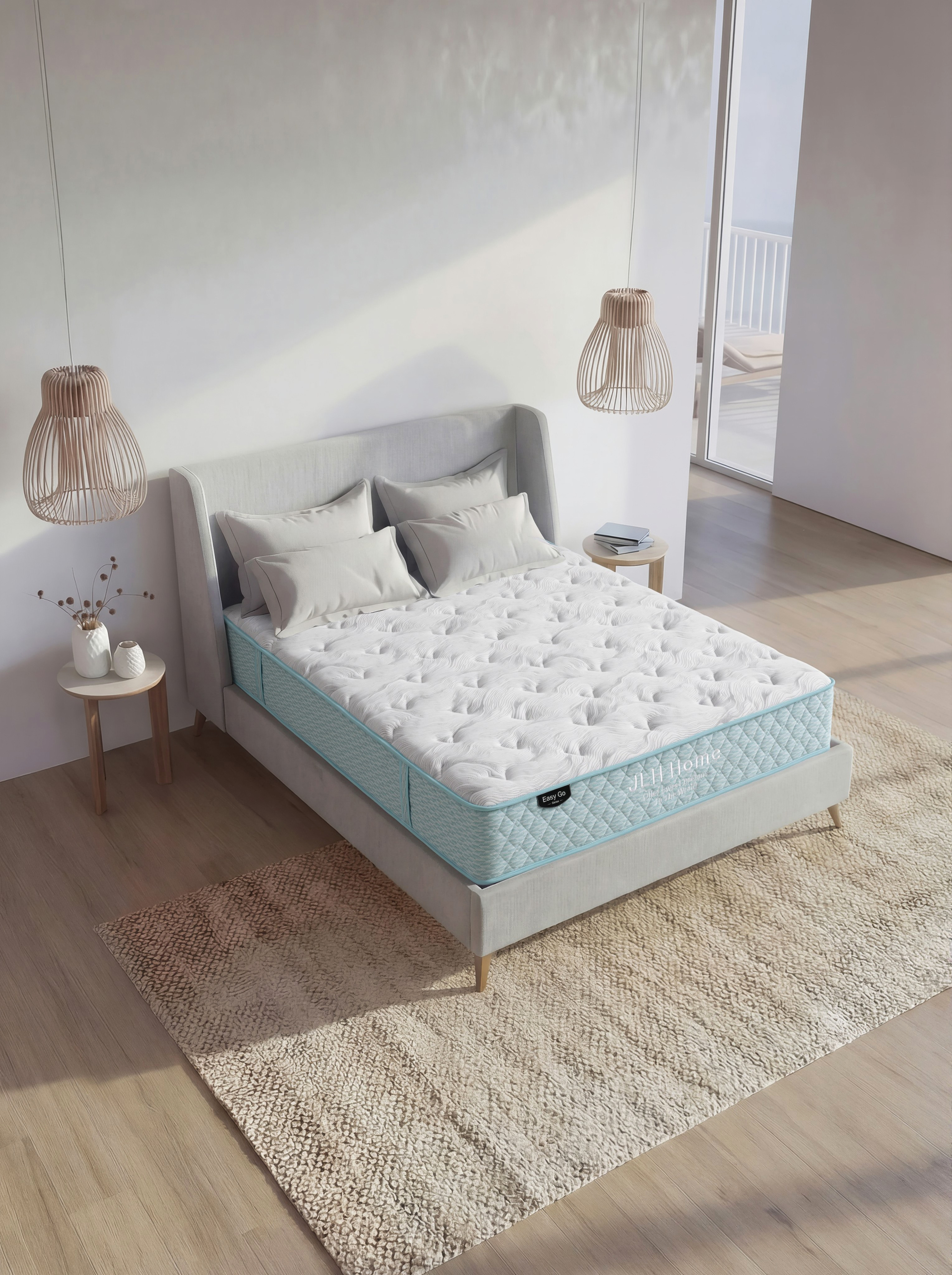
Choosing the right foam density for hotel mattresses to prevent sagging requires selecting high-density support layers, typically above 30 kg/m³ for high-resiliency foam or 50 kg/m³ for memory foam. Combining these dense foam layers with robust pocket spring support structures ensures long-term shape retention and structural integrity under high-frequency commercial use.
Core Solutions & Key Takeaways
- High-Density Foam Selection: Use core comfort layers with high-density ratings (30 kg/m³ or higher) to distribute body weight evenly and prevent premature body impressions.
- Hybrid Support Architectures: Pair high-density foam with independent pocket spring systems to mitigate localized pressure, a standard configuration across high-end hospitality and residential projects.
- International Standard Compliance: Select mattresses passing stringent standards such as BS 7177 (UK) and CFR 1633 (US) to guarantee long-term material resilience and safety.
- Compression Compatibility: High-density foams are designed to withstand vacuum roll-packing and compression without suffering structural degradation or recovery failures during shipping.
Detailed Architectural/Principle Analysis
Foam density directly dictates the lifespan and sagging resistance of hotel mattresses. In commercial environments with high guest turnover, lower-density foams (under 25 kg/m³) suffer rapid cell wall breakdown under repetitive loads, leading to permanent body indentations and a loss of support. High-density foams possess thicker cell walls and a more robust physical matrix, allowing them to rebound consistently and maintain their original height over years of continuous use.
To achieve optimal performance, hospitality mattresses integrate multiple layers of specialized foams. Jinlongheng Furniture Co., Ltd. designs these systems utilizing in-house spring and foam workshops, controlling the chemical formulation and physical density from the raw material stage. By layering high-resiliency transition foam over pocket spring grids, the mattress achieves progressive load-bearing support, ensuring that guests of varying body weights experience consistent spinal alignment without bottoming out.
These material principles are validated through rigorous physical testing. Our products undergo strict verification within our CNAS-accredited national laboratory to monitor structural fatigue and deformation rates. This engineering approach has been proven in global hospitality applications, including Hotel Gołębiewski Mikołajki in Poland (which utilized these mattresses across 689 guest rooms) and the Beijing Financial Street Ritz-Carlton Hotel.

Data/Solution Comparison
The following table outlines the performance differences of various foam configurations in commercial hospitality applications, supporting sea freight, air freight, and rail freight delivery methods.
| Foam Type | Recommended Density Range | Hotel Lifespan Estimate | Sagging Resistance Rating | Primary Commercial Application |
|---|---|---|---|---|
| High-Resiliency (HR) Foam | ≥ 30 kg/m³ | 7 - 10 Years | High | Core comfort layers and transition support layers |
| Standard Polyurethane Foam | 15 - 25 kg/m³ | 2 - 3 Years | Low | Budget quilting layers or temporary guest bedding |
| Memory Foam | ≥ 50 kg/m³ | 5 - 8 Years | Medium-High | Pressure-relieving top comfort layers |
Frequently Asked Questions (FAQ)
Does a higher foam density make the hotel mattress feel excessively firm?
Density and firmness are independent parameters. Density measures the weight of the foam per cubic meter, which determines durability and sagging resistance. Firmness (measured by Indentation Load Deflection) is adjusted during chemical formulation. High-density foam can be engineered to feel soft while retaining its supportive cell structure.
Can vacuum-rolled mattresses maintain their foam density after unpacking?
Yes. High-density foams possess superior elastic recovery. Mattresses engineered with advanced vacuum compression recover their full height, density, and physical properties within 24 to 72 hours of unpacking without structural damage.
What certifications guarantee the durability of hotel mattress foam?
Look for comprehensive manufacturing and safety certifications. Durability and environmental safety are verified through standard protocols including ISO 9001, CertiPUR-US, and OEKO-TEX, along with fire safety compliance certificates like BS 7177 and CFR 1633.
Final Conclusion & Recommendations
To prevent sagging in high-use hospitality environments, commercial buyers should prioritize mattresses built with high-density foam layers paired with robust pocket spring systems. Selecting a manufacturer with fully self-controlled core material workshops ensures consistent density control, verified performance, and stable supply. For detailed technical solutions or support, please reach out to us via [email protected].
About Us
Jinlongheng Furniture Co., Ltd., founded in 1992 and headquartered in Shunde, Guangdong, has been dedicated to the sleep industry for over 34 years. The company operates a total production base of 630,000 square meters and employs over 800 staff, including 528 skilled production technicians. Backed by a monthly production capacity of 120,000 mattresses, the organization distributes spring mattresses, foam mattresses, upholstered beds, and compressed sofas to over 125 countries and regions.
Our manufacturing and quality systems carry authoritative global certifications including ISO 9001, ISO 14001, ISO 45001, BSCI, and ISPA. The brand has served clients across multiple industries, including luxury hospitality partnerships with Wyndham Hotels Group, Velaa Private Island, and the Ritz-Carlton.

Lastest
-
How are rising fuel costs impacting global LCL shipping trends?
2026-08-01 -
Is it possible to emboss our brand logo on vegetan leather?
2026-08-01 -
How does the supplier handle defective parts of a K-House?
2026-08-01 -
How do I choose the right laser light show wattage for a 5000-person outdoor venue?
2026-08-01 -
How do I verify the actual brightness of an RGB laser projector before buying bulk?
2026-08-01
SUBSCRIBE
INQUIRY