- Masonry Materials
- Curtain Walls & Accessories
- Earthwork Products
- Fireproofing Materials
- Heat Insulation Materials
- Plastic Building Materials
- Building Boards
- Soundproofing Materials
- Timber
- Waterproofing Materials
- Balustrades & Handrails
- Bathroom & Kitchen
- Flooring & Accessories
- Tiles & Accessories
- Door, Window & Accessories
- Fireplaces & Stoves
- Floor Heating Systems & Parts
- Stairs & Stair Parts
- Ceilings
- Elevators & Escalators
- Stone
- Countertops, Vanity Tops & Table Tops
- Mosaics
- Metal Building Materials
- Multifunctional Materials
- Ladders & Scaffoldings
- Mouldings
- Corner Guards
- Decorative Films
- Formwork
- Building & Industrial Glass
- Other Construction & Real Estate
- Wallpapers/Wall panels
- HVAC System & Parts
- Outdoor Facilities
- Prefabricated Buildings
- Festive & Party Supplies
- Bathroom Products
- Household Sundries
- Rain Gear
- Garden Supplies
- Household Cleaning Tools & Accessories
- Lighters & Smoking Accessories
- Home Storage & Organization
- Household Scales
- Smart Home Improvement
- Home Textiles
- Kitchenware
- Drinkware & Accessories
- Dinnerware, Coffee & Wine
- Home Decor
- Golf
- Fitness & Body Building
- Amusement Park Facilities
- Billiards, Board Game,Coin Operated Games
- Musical Instruments
- Outdoor Affordable Luxury Sports
- Camping & Hiking
- Fishing
- Sports Safety&Rehabilitation
- Ball Sports Equipments
- Water Sports
- Winter Sports
- Luxury Travel Equipments
- Sports Shoes, Bags & Accessories
- Cycling
- Other Sports & Entertainment Products
- Artificial Grass&Sports Flooring&Sports Court Equipment
- Scooters
- Food Ingredients
- Honey & Honey Products
- Snacks
- Nuts & Kernels
- Seafood
- Plant & Animal Oil
- Beverages
- Fruit & Vegetable Products
- Frog & Escargot
- Bean Products
- Egg Products
- Dairy Products
- Seasonings & Condiments
- Canned Food
- Instant Food
- Baked Goods
- Other Food & Beverage
- Meat & Poultry
- Confectionery
- Grain Products
- Feminie Care
- Hair Care & Styling
- Body Care
- Hands & Feet Care
- Hygiene Products
- Men's Grooming
- Laundry Cleaning Supplies
- Travel Size & Gift Sets
- Room Deodorizers
- Other Personal Care Products
- Pest Control Products
- Special Household Cleaning
- Floor Cleaning
- Kitchen & Bathroom Cleaning
- Oral Care
- Bath Supplies
- Yellow Pages
- Correction Supplies
- Office Binding Supplies
- Office Cutting Supplies
- Board Erasers
- Office Adhesives & Tapes
- Education Supplies
- Pencil Cases & Bags
- Notebooks & Writing Pads
- File Folder Accessories
- Calendars
- Writing Accessories
- Commercial Office Supplies
- Pencil Sharpeners
- Pens
- Letter Pad/Paper
- Paper Envelopes
- Desk Organizers
- Pencils
- Markers & Highlighters
- Filing Products
- Art Supplies
- Easels
- Badge Holder & Accessories
- Office Paper
- Printer Supplies
- Book Covers
- Other Office & School Supplies
- Stationery Set
- Boards
- Clipboards
- Stamps
- Drafting Supplies
- Stencils
- Electronic Dictionary
- Books
- Map
- Magazines
- Calculators
- Baby & Toddler Toys
- Educational Toys
- Classic Toys
- Dress Up & Pretend Play
- Toy Vehicle
- Stuffed Animals & Plush Toys
- Outdoor Toys & Structures
- Balloons & Accessories
- Baby Food
- Children's Clothing
- Baby Supplies & Products
- Maternity Clothes
- Kids Shoes
- Baby Care
- Novelty & Gag Toys
- Dolls & Accessories
- Puzzle & Games
- Blocks & Model Building Toys
- Toddler Clothing
- Baby Clothing
- Kids' Luggage & Bags
- Arts, Crafts & DIY Toys
- Action & Toy Figures
- Baby Appliances
- Hobbies & Models
- Remote Control Toys
- Promotional Toys
- Pregnancy & Maternity
- Hygiene Products
- Kid's Textile&Bedding
- Novelty & Special Use
- Toy Weapons
- Baby Gifts
- Baby Storage & Organization
- Auto Drive Systems
- ATV/UTV Parts & Accessories
- Marine Parts & Accessories
- Other Auto Parts
- Trailer Parts & Accessories
- Auto Transmission Systems
- Train Parts & Accessories
- Universal Parts
- Railway Parts & Accessories
- Auto Brake Systems
- Aviation Parts & Accessories
- Truck Parts & Accessories
- Auto Suspension Systems
- Auto Lighting Systems
- New Energy Vehicle Parts & Accessories
- Auto Steering Systems
- Wheels, Tires & Accessories
- Bus Parts & Accessories
- Auto Performance Parts
- Cooling System
- Go-Kart & Kart Racer Parts & Accessories
- Air Conditioning Systems
- Heavy Duty Vehicle Parts & Accessories
- Auto Electrical Systems
- Auto Body Systems
- Auto Engine Systems
- Container Parts & Accessories
- Motorcycle Parts & Accessories
- Refrigeration & Heat Exchange Equipment
- Machine Tool Equipment
- Food & Beverage Machinery
- Agricultural Machinery & Equipment
- Apparel & Textile Machinery
- Chemical Machinery
- Packaging Machines
- Paper Production Machinery
- Plastic & Rubber Processing Machinery
- Industrial Robots
- Electronic Products Machinery
- Metal & Metallurgy Machinery
- Woodworking Machinery
- Home Product Manufacturing Machinery
- Machinery Accessories
- Environmental Machinery
- Machinery Service
- Electrical Equipment Manufacturing Machinery
- Industrial Compressors & Parts
- Tobacco & Cigarette Machinery
- Production Line
- Used Industrial Machinery
- Electronics Production Machinery
- Other Machinery & Industrial Equipment
- Camera, Photo & Accessories
- Portable Audio, Video & Accessories
- Television, Home Audio, Video & Accessories
- Video Games & Accessories
- Mobile Phone & Accessories
- Electronic Publications
- Earphone & Headphone & Accessories
- Speakers & Accessories
- Smart Electronics
- TV Receivers & Accessories
- Mobile Phone & Computer Repair Parts
- Chargers, Batteries & Power Supplies
- Used Electronics
- VR, AR, MR Hardware & Software
- Projectors & Presentation Equipments
- Other Consumer Electronics
- Cables & Commonly Used Accessories
- Computer Hardware & Software
- Displays, Signage and Optoelectronics
- Discrete Semiconductors
- Wireless & IoT Module and Products
- Telecommunications
- Connectors, Terminals & Accessories
- Development Boards, Electronic Modules and Kits
- Circuit Protection
- Sensors
- Isolators
- Audio Components and Products
- Integrated Circuits
- Power Supplies
- Relays
- RF, Microwave and RFID
- Electronic Accessories & Supplies
- Passive Components
- PCB & PCBA
- Air Quality Appliances
- Home Appliance Parts
- Heating & Cooling Appliances
- Small Kitchen Appliances
- Laundry Appliances
- Water Heaters
- Water Treatment Appliances
- Refrigerators & Freezers
- Personal Care & Beauty Appliances
- Major Kitchen Appliances
- Cleaning Appliances
- Second-hand Appliances
- Smart Home Appliances
- Other Home Appliances
- Energy Chemicals
- Inorganic Chemicals
- Basic Organic Chemicals
- Agrochemicals
- Admixture & Additives
- Catalysts & Chemical Auxiliary Agents
- Pigments & Dyestuff
- Coating & Paint
- Daily Chemicals
- Polymer
- Organic Intermediate
- Adhesives & Sealants
- Chemical Waste
- Biological Chemical Products
- Surface Treatment Chemicals
- Painting & Coating
- Chemical Reagents
- Flavor & Fragrance
- Non-Explosive Demolition Agents
- Other Chemicals
- Custom Chemical Services

How do you handle defective components in the moving head beam light factory?
- VIP-User
- 2026-07-19
- 1
A professional stage lighting factory handles defective components in moving head beam lights through a rigorous multi-stage quality control process. This workflow spans incoming material inspection, real-time production monitoring, functional testing of components like CMY color mixing systems, and comprehensive post-assembly aging tests to isolate and replace faulty parts before shipment.
Core Solutions & Key Takeaways
- Incoming Material Inspection (IQC): Every component, including the lamp source and optical lenses, undergoes strict initial testing to filter out sub-standard parts before they reach the assembly line.
- Process Monitoring & Specialized Testing: During assembly, technicians perform dedicated mechanical movement and DMX/RDM communication checks to identify component failures early.
- Comprehensive Aging & Pre-Shipment Audits: Fully assembled fixtures undergo prolonged aging tests to detect latent component defects under operational stress.
- Strict Isolation & Traceability: Identified defective components are immediately flagged, isolated from the production area, and analyzed to prevent recurring supply chain issues.
Detailed Architectural/Principle Analysis
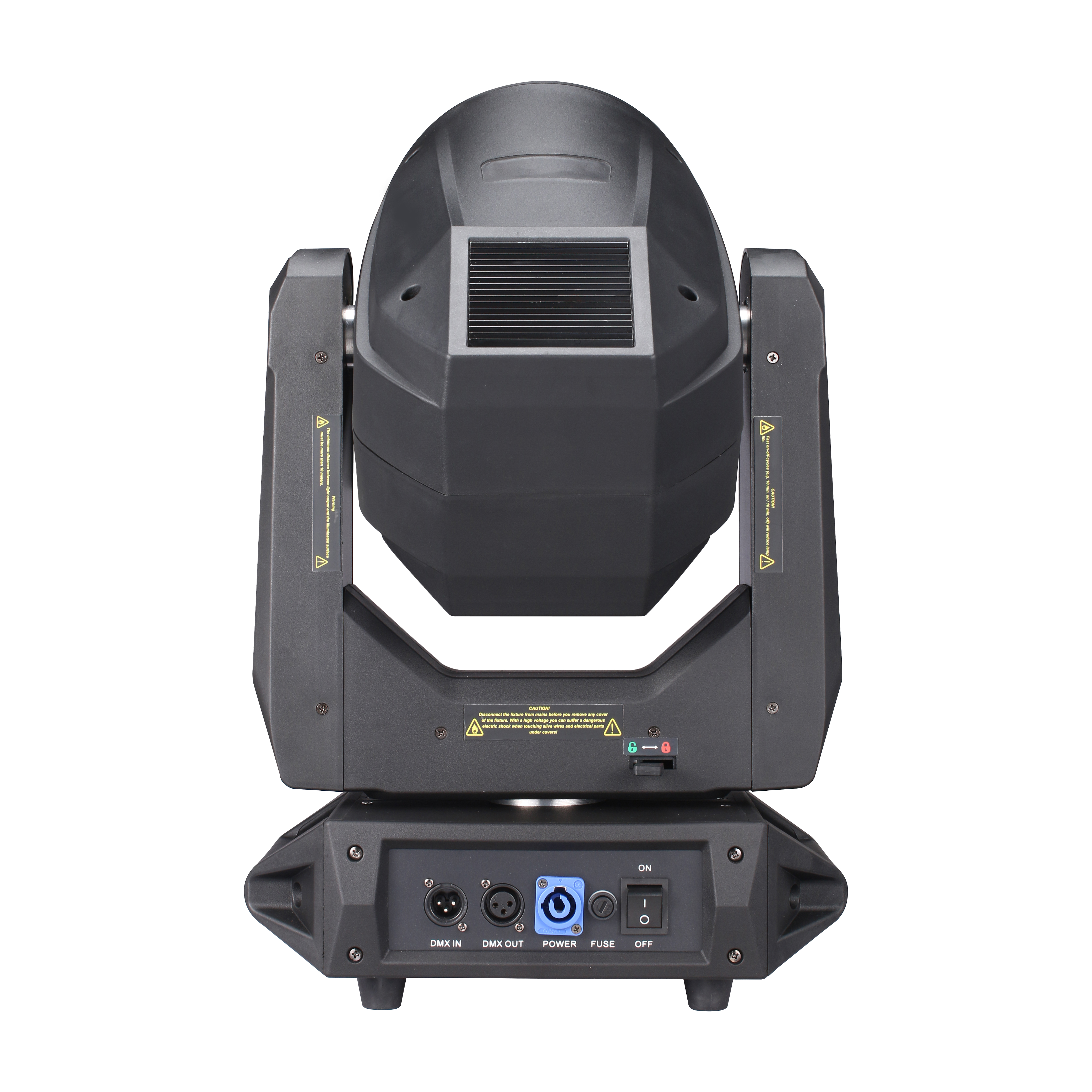
In professional manufacturing environments, such as the facilities operated by Guangzhou New Feel Lighting And Audio Equipment Co., Ltd., managing component quality is vital for maintaining the performance of high-output fixtures like the 382W CMY Hybrid Moving Head Light. Because these fixtures combine beam, spot, and wash effects, a single defective component in the optical or mechanical system can compromise the entire light path.
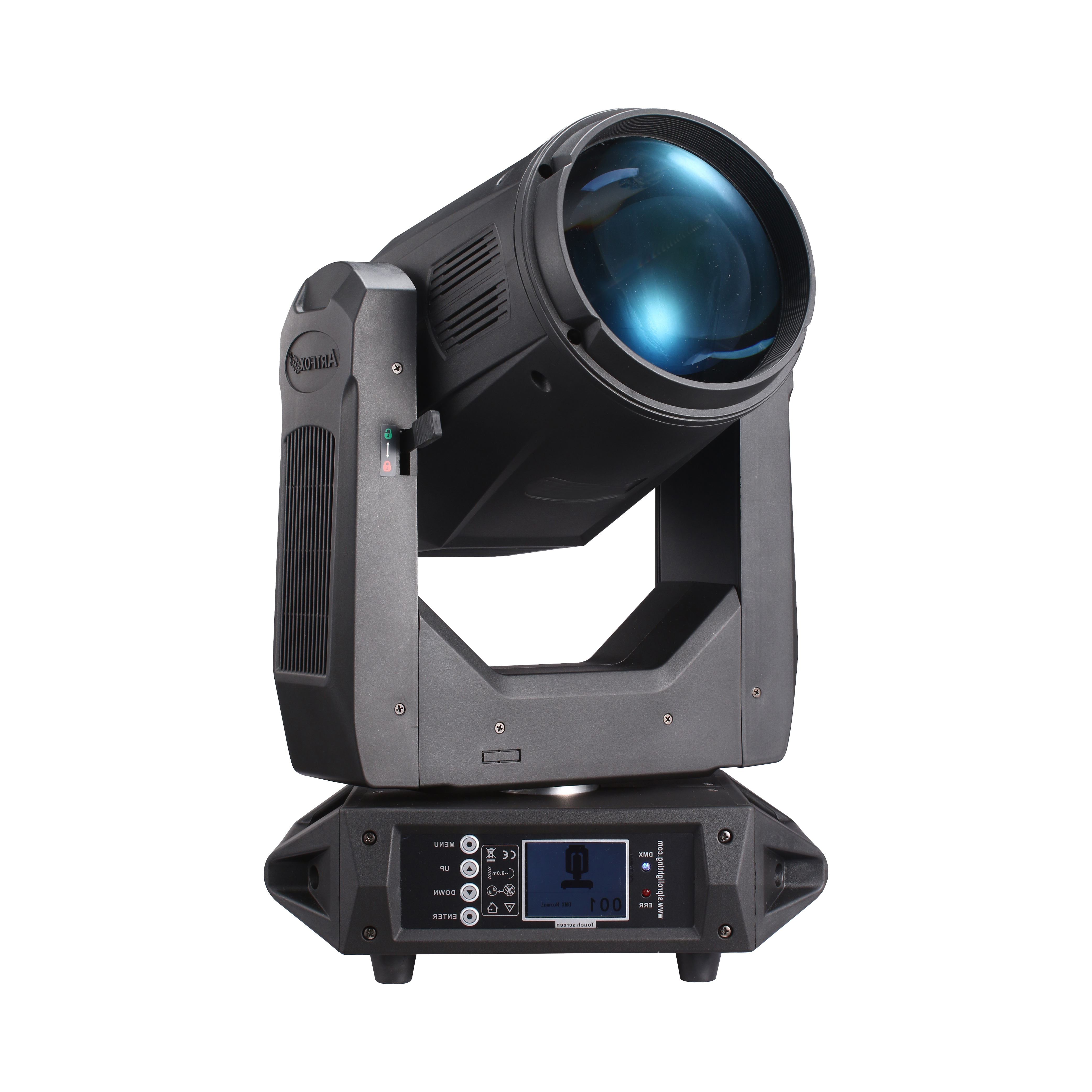
The control process begins at the receiving dock. Technicians inspect incoming power supplies, motors, and CMY color mixing flags. If a batch of motors exhibits step-loss or if the CMY filters show color inconsistency, they are rejected and returned to the vendor. For accepted parts that fail during assembly, a strict non-conforming material control procedure is triggered. The defective component is tagged with a red label and placed in a locked rejection bin to avoid accidental integration into the production line.
This systematic approach is backed by international standards. For instance, the factory's laser and lighting products carry CE certification (Certificate Number: UTT202406076C), validating the safety and compliance of the electrical architectures used. In real-world applications, such as a bulk supply project involving over 500 units of RGB laser lights and special effects equipment for a US distributor, this rigorous component screening directly translates to stable operation during demanding event productions.
Data/Solution Comparison
| Inspection Stage | Target Components Tested | Defect Detection Method | Action Taken Upon Failure |
|---|---|---|---|
| Incoming Quality Control (IQC) | Lamp sources, lenses, CMY flags, motors, PCBA boards | Visual inspection, electrical parameter testing, optical metering | Rejection of batch, return to supplier |
| In-Process Quality Control (IPQC) | Assembled modules, wiring harnesses, mechanical gears | DMX/RDM communication testing, manual alignment checks | Immediate replacement of component on the line |
| Outgoing Quality Assurance (OQA) | Finished moving head beam lights | Continuous aging tests (24-48 hours), vibration tests | Rework of the fixture, root cause analysis of the failed component |
Frequently Asked Questions (FAQ)
Q1: What happens if a CMY color mixing component fails during the burn-in test?
A1: The fixture is immediately moved to a dedicated technical diagnostic area. Technicians swap the faulty CMY module with a certified spare, re-run the DMX communication diagnostics, and restart the full aging cycle to ensure the replacement performs reliably.
Q2: How does the factory ensure replacement parts match the original specifications?
A2: The factory utilizes standardized OEM/ODM component sourcing. All critical spares, from the 382W lamp sources to the step motors, are checked against strict technical drawings and gold-standard reference units stored in the R&D department.
Q3: Are the testing procedures different for customized or OEM stage lights?
A3: The core quality control workflow remains identical, but customized projects undergo additional parameters checks tailored to the customer's specific control protocols, power configurations, or installation brackets.
Final Conclusion & Recommendations
Mitigating defective components in moving head beam lights requires an integrated quality assurance system that spans from the raw material stage to post-sale support. By implementing incoming material inspections, structural testing, and extended aging trials, manufacturers ensure consistent performance for demanding stage, concert, and theater environments. For inquiries regarding custom stage lighting solutions or volume orders, please reach out to us via [email protected].
About Us
Guangzhou New Feel Lighting And Audio Equipment Co., Ltd., established in 2008, is a professional manufacturer specializing in stage lighting and special effects equipment based in Guangzhou, China. Operating from a 3,500 square meters factory, our professional R&D team provides reliable OEM/ODM solutions to meet the diverse requirements of global customers. With a monthly production capacity of approximately 5,000+ lighting units, we serve distributors, rental companies, and project contractors across North America, Europe, and other international markets.

Lastest
-
How are rising fuel costs impacting global LCL shipping trends?
2026-07-19 -
Is it possible to emboss our brand logo on vegetan leather?
2026-07-19 -
How does the supplier handle defective parts of a K-House?
2026-07-19 -
How do I choose the right laser light show wattage for a 5000-person outdoor venue?
2026-07-19 -
How do I verify the actual brightness of an RGB laser projector before buying bulk?
2026-07-19
SUBSCRIBE
INQUIRY