- Masonry Materials
- Curtain Walls & Accessories
- Earthwork Products
- Fireproofing Materials
- Heat Insulation Materials
- Plastic Building Materials
- Building Boards
- Soundproofing Materials
- Timber
- Waterproofing Materials
- Balustrades & Handrails
- Bathroom & Kitchen
- Flooring & Accessories
- Tiles & Accessories
- Door, Window & Accessories
- Fireplaces & Stoves
- Floor Heating Systems & Parts
- Stairs & Stair Parts
- Ceilings
- Elevators & Escalators
- Stone
- Countertops, Vanity Tops & Table Tops
- Mosaics
- Metal Building Materials
- Multifunctional Materials
- Ladders & Scaffoldings
- Mouldings
- Corner Guards
- Decorative Films
- Formwork
- Building & Industrial Glass
- Other Construction & Real Estate
- Wallpapers/Wall panels
- HVAC System & Parts
- Outdoor Facilities
- Prefabricated Buildings
- Festive & Party Supplies
- Bathroom Products
- Household Sundries
- Rain Gear
- Garden Supplies
- Household Cleaning Tools & Accessories
- Lighters & Smoking Accessories
- Home Storage & Organization
- Household Scales
- Smart Home Improvement
- Home Textiles
- Kitchenware
- Drinkware & Accessories
- Dinnerware, Coffee & Wine
- Home Decor
- Golf
- Fitness & Body Building
- Amusement Park Facilities
- Billiards, Board Game,Coin Operated Games
- Musical Instruments
- Outdoor Affordable Luxury Sports
- Camping & Hiking
- Fishing
- Sports Safety&Rehabilitation
- Ball Sports Equipments
- Water Sports
- Winter Sports
- Luxury Travel Equipments
- Sports Shoes, Bags & Accessories
- Cycling
- Other Sports & Entertainment Products
- Artificial Grass&Sports Flooring&Sports Court Equipment
- Scooters
- Food Ingredients
- Honey & Honey Products
- Snacks
- Nuts & Kernels
- Seafood
- Plant & Animal Oil
- Beverages
- Fruit & Vegetable Products
- Frog & Escargot
- Bean Products
- Egg Products
- Dairy Products
- Seasonings & Condiments
- Canned Food
- Instant Food
- Baked Goods
- Other Food & Beverage
- Meat & Poultry
- Confectionery
- Grain Products
- Feminie Care
- Hair Care & Styling
- Body Care
- Hands & Feet Care
- Hygiene Products
- Men's Grooming
- Laundry Cleaning Supplies
- Travel Size & Gift Sets
- Room Deodorizers
- Other Personal Care Products
- Pest Control Products
- Special Household Cleaning
- Floor Cleaning
- Kitchen & Bathroom Cleaning
- Oral Care
- Bath Supplies
- Yellow Pages
- Correction Supplies
- Office Binding Supplies
- Office Cutting Supplies
- Board Erasers
- Office Adhesives & Tapes
- Education Supplies
- Pencil Cases & Bags
- Notebooks & Writing Pads
- File Folder Accessories
- Calendars
- Writing Accessories
- Commercial Office Supplies
- Pencil Sharpeners
- Pens
- Letter Pad/Paper
- Paper Envelopes
- Desk Organizers
- Pencils
- Markers & Highlighters
- Filing Products
- Art Supplies
- Easels
- Badge Holder & Accessories
- Office Paper
- Printer Supplies
- Book Covers
- Other Office & School Supplies
- Stationery Set
- Boards
- Clipboards
- Stamps
- Drafting Supplies
- Stencils
- Electronic Dictionary
- Books
- Map
- Magazines
- Calculators
- Baby & Toddler Toys
- Educational Toys
- Classic Toys
- Dress Up & Pretend Play
- Toy Vehicle
- Stuffed Animals & Plush Toys
- Outdoor Toys & Structures
- Balloons & Accessories
- Baby Food
- Children's Clothing
- Baby Supplies & Products
- Maternity Clothes
- Kids Shoes
- Baby Care
- Novelty & Gag Toys
- Dolls & Accessories
- Puzzle & Games
- Blocks & Model Building Toys
- Toddler Clothing
- Baby Clothing
- Kids' Luggage & Bags
- Arts, Crafts & DIY Toys
- Action & Toy Figures
- Baby Appliances
- Hobbies & Models
- Remote Control Toys
- Promotional Toys
- Pregnancy & Maternity
- Hygiene Products
- Kid's Textile&Bedding
- Novelty & Special Use
- Toy Weapons
- Baby Gifts
- Baby Storage & Organization
- Auto Drive Systems
- ATV/UTV Parts & Accessories
- Marine Parts & Accessories
- Other Auto Parts
- Trailer Parts & Accessories
- Auto Transmission Systems
- Train Parts & Accessories
- Universal Parts
- Railway Parts & Accessories
- Auto Brake Systems
- Aviation Parts & Accessories
- Truck Parts & Accessories
- Auto Suspension Systems
- Auto Lighting Systems
- New Energy Vehicle Parts & Accessories
- Auto Steering Systems
- Wheels, Tires & Accessories
- Bus Parts & Accessories
- Auto Performance Parts
- Cooling System
- Go-Kart & Kart Racer Parts & Accessories
- Air Conditioning Systems
- Heavy Duty Vehicle Parts & Accessories
- Auto Electrical Systems
- Auto Body Systems
- Auto Engine Systems
- Container Parts & Accessories
- Motorcycle Parts & Accessories
- Refrigeration & Heat Exchange Equipment
- Machine Tool Equipment
- Food & Beverage Machinery
- Agricultural Machinery & Equipment
- Apparel & Textile Machinery
- Chemical Machinery
- Packaging Machines
- Paper Production Machinery
- Plastic & Rubber Processing Machinery
- Industrial Robots
- Electronic Products Machinery
- Metal & Metallurgy Machinery
- Woodworking Machinery
- Home Product Manufacturing Machinery
- Machinery Accessories
- Environmental Machinery
- Machinery Service
- Electrical Equipment Manufacturing Machinery
- Industrial Compressors & Parts
- Tobacco & Cigarette Machinery
- Production Line
- Used Industrial Machinery
- Electronics Production Machinery
- Other Machinery & Industrial Equipment
- Camera, Photo & Accessories
- Portable Audio, Video & Accessories
- Television, Home Audio, Video & Accessories
- Video Games & Accessories
- Mobile Phone & Accessories
- Electronic Publications
- Earphone & Headphone & Accessories
- Speakers & Accessories
- Smart Electronics
- TV Receivers & Accessories
- Mobile Phone & Computer Repair Parts
- Chargers, Batteries & Power Supplies
- Used Electronics
- VR, AR, MR Hardware & Software
- Projectors & Presentation Equipments
- Other Consumer Electronics
- Cables & Commonly Used Accessories
- Computer Hardware & Software
- Displays, Signage and Optoelectronics
- Discrete Semiconductors
- Wireless & IoT Module and Products
- Telecommunications
- Connectors, Terminals & Accessories
- Development Boards, Electronic Modules and Kits
- Circuit Protection
- Sensors
- Isolators
- Audio Components and Products
- Integrated Circuits
- Power Supplies
- Relays
- RF, Microwave and RFID
- Electronic Accessories & Supplies
- Passive Components
- PCB & PCBA
- Air Quality Appliances
- Home Appliance Parts
- Heating & Cooling Appliances
- Small Kitchen Appliances
- Laundry Appliances
- Water Heaters
- Water Treatment Appliances
- Refrigerators & Freezers
- Personal Care & Beauty Appliances
- Major Kitchen Appliances
- Cleaning Appliances
- Second-hand Appliances
- Smart Home Appliances
- Other Home Appliances
- Energy Chemicals
- Inorganic Chemicals
- Basic Organic Chemicals
- Agrochemicals
- Admixture & Additives
- Catalysts & Chemical Auxiliary Agents
- Pigments & Dyestuff
- Coating & Paint
- Daily Chemicals
- Polymer
- Organic Intermediate
- Adhesives & Sealants
- Chemical Waste
- Biological Chemical Products
- Surface Treatment Chemicals
- Painting & Coating
- Chemical Reagents
- Flavor & Fragrance
- Non-Explosive Demolition Agents
- Other Chemicals
- Custom Chemical Services

How does AI technology influence professional stage lighting equipment control?
- VIP-User
- 2026-07-17
- 1
AI technology influences professional stage lighting equipment control by automating complex programming, enabling real-time music synchronization, and optimizing beam trajectories. Through intelligent algorithms, modern controllers dynamically adjust parameters for moving heads and high-power laser projectors, reducing manual DMX programming while enhancing show synchronization and operational reliability.
Core Solutions & Key Takeaways
Modern entertainment and architectural projects require adaptive lighting solutions that respond dynamically to live inputs. High-power projection systems, such as the 30W RGB IP65 Outdoor Laser Projector (Model N6), rely on advanced digital control interfaces to translate intricate generative designs into physical light. This outdoor-rated projector delivers high-power RGB laser effects and smooth animation graphics across extreme distances, making it ideal for integration with algorithmic software engines. 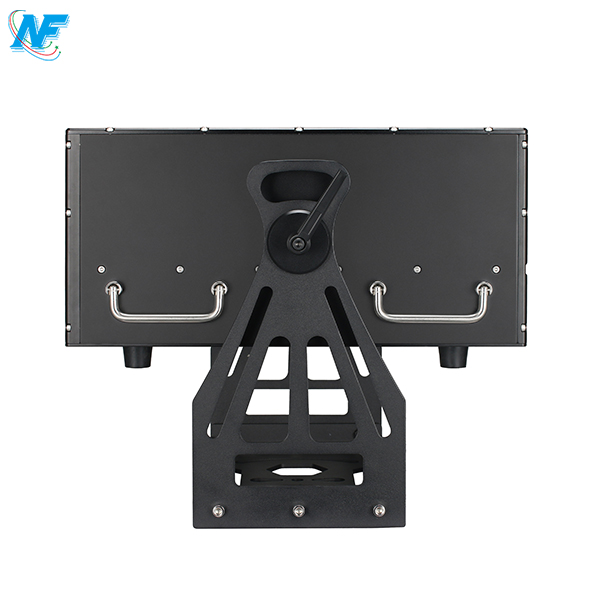
- Automated Scene Generation: AI algorithms process live audio inputs to automate color palettes, strobe rates, and movement patterns, eliminating hours of manual cue patching.
- Predictive System Diagnostics: Intelligent monitoring systems inside moving heads and laser units analyze temperature and voltage data to flag maintenance needs before hardware failure occurs.
- Geometric Correction: Laser control software uses machine learning to automatically calibrate projection paths, ensuring perfect alignment on uneven architectural surfaces.
- Hybrid Protocol Translation: Smart interface nodes convert algorithmic generative visuals into standard DMX-512 and ILDA formats, ensuring compatibility with legacy staging setups.
Detailed Architectural/Principle Analysis
Traditional stage lighting control relies heavily on static, pre-programmed DMX or ILDA timelines. AI-driven control architectures introduce a dynamic feedback loop by integrating sensor arrays, including cameras and spectral audio analyzers, with the central processing unit. This feedback loop allows the system to make micro-adjustments to pan, tilt, zoom, and color mixing on the fly, matching the physical performance without human intervention.
For high-power installations, maintaining safety and precision is paramount. Hardware like professional laser systems must operate under strict regulatory standards. Systems complying with international guidelines, such as CE certification (UTT202406076C) for laser lights, ensure that automated control routines remain within safe exposure levels. These standards are critical when algorithms dynamically adjust laser intensity and scanning speeds during live public events.
Practical deployment of automated and robust stage hardware has proven successful in international markets. A stage production company in France integrated over 1,500 professional lighting units to automate complex beam movements and atmospheric effects across large music festivals. Additionally, an equipment distributor in the United States completed a bulk deployment of 500+ units, including RGB lasers and fog machines, utilizing automated setups to streamline private party and DJ lighting workflows. 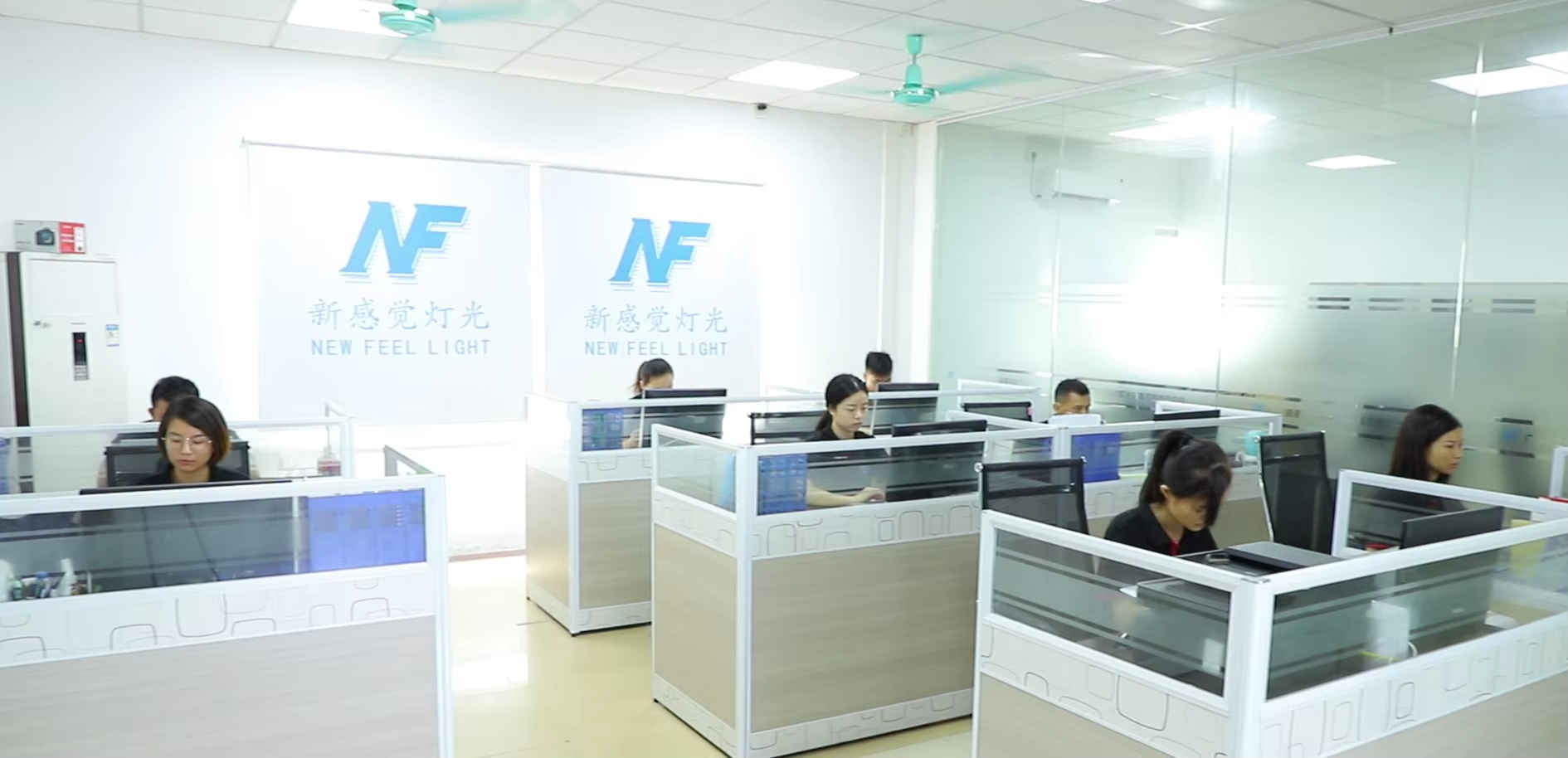
Data/Solution Comparison
Selecting the appropriate control framework depends on the specific project scale, budget, and real-time interaction requirements. The table below outlines the operational differences between standard control methods and AI-assisted automation platforms.
| Control Methodology | Interface Standard | Audio-Visual Synchronization | Programming Effort | Operational Best Use Case |
|---|---|---|---|---|
| Traditional DMX Console | DMX-512 / Art-Net | Manual trigger or pre-set MIDI clock | High (Individual cue and step programming) | Theatrical plays and scripted concerts |
| Standard ILDA Control | DB25 / Ethernet | Pre-rendered timeline playback | Medium (Vector graphic editing) | Corporate branding and text projection |
| AI-Assisted Smart Control | Intelligent Node / Ethernet | Real-time spectral analysis & prediction | Low (Algorithmic scene generation) | Landmark lighting, massive EDM festivals |
Frequently Asked Questions (FAQ)
Can legacy stage lighting fixtures be updated to support automated AI controls?
Yes. Legacy fixtures using standard DMX-512 protocols can connect to intelligent control systems through smart Art-Net nodes or media servers. These translation devices interpret algorithmic commands and map them to standard fixture channel profiles.
How does the 30W RGB IP65 Outdoor Laser Projector maintain calibration in changing weather?
The projector is built with an IP65-rated weatherproof housing and utilizes high-speed internal galvo scanners. Intelligent control systems monitor thermal parameters and adjust scanning geometric limits to prevent optical drift caused by temperature fluctuations.
Do automated control systems require an active internet connection?
No. Most advanced local control engines operate on local media servers or dedicated hardware controllers. Once the machine learning model or analysis algorithm is loaded onto the local processor, it can run completely offline using local sensory feeds.
Final Conclusion & Recommendations
Integrating intelligent automation into stage setups reduces manual programming timelines and minimizes human error during complex live events. For major installations, event producers should select hardware designed for high-speed protocol processing and certified safety compliance. Partnering with manufacturers that offer versatile OEM/ODM solutions, reliable pre-shipment aging tests, and complete international logistics options ensures seamless system integration from the factory floor to the venue stage. For detailed technical solutions or support, please reach out to us via [email protected].
About Us
Established in 2008, Guangzhou New Feel Lighting And Audio Equipment Co., Ltd. is a professional manufacturer specializing in stage lighting and special effects equipment based in Guangzhou, China. Our production facilities cover a factory area of 3,500 square meters, supporting an experienced workforce of 50 employees and generating a monthly production capacity of over 5,000 professional lighting units. The in-house R&D team drives innovation in optical design, electronic control, and structural optimization for laser systems, moving heads, and stage special effects.
Our commitment to reliable hardware is backed by rigorous quality control processes, including incoming component testing, aging tests, and final pre-shipment inspections. Our laser light systems hold CE certification (Certificate Number: UTT202406076C) to meet the global safety requirements of distributors, rental companies, and lighting designers. 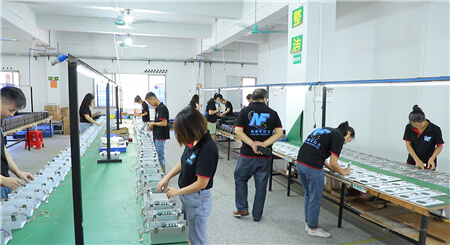
We serve international markets including North America, Europe, South America, Southeast Asia, the Middle East, and Africa, delivering tailored solutions for concerts, festivals, weddings, and architectural projects. 
Lastest
-
How are rising fuel costs impacting global LCL shipping trends?
2026-07-17 -
Is it possible to emboss our brand logo on vegetan leather?
2026-07-17 -
How does the supplier handle defective parts of a K-House?
2026-07-17 -
How do I choose the right laser light show wattage for a 5000-person outdoor venue?
2026-07-17 -
How do I verify the actual brightness of an RGB laser projector before buying bulk?
2026-07-17
SUBSCRIBE
INQUIRY