- Masonry Materials
- Curtain Walls & Accessories
- Earthwork Products
- Fireproofing Materials
- Heat Insulation Materials
- Plastic Building Materials
- Building Boards
- Soundproofing Materials
- Timber
- Waterproofing Materials
- Balustrades & Handrails
- Bathroom & Kitchen
- Flooring & Accessories
- Tiles & Accessories
- Door, Window & Accessories
- Fireplaces & Stoves
- Floor Heating Systems & Parts
- Stairs & Stair Parts
- Ceilings
- Elevators & Escalators
- Stone
- Countertops, Vanity Tops & Table Tops
- Mosaics
- Metal Building Materials
- Multifunctional Materials
- Ladders & Scaffoldings
- Mouldings
- Corner Guards
- Decorative Films
- Formwork
- Building & Industrial Glass
- Other Construction & Real Estate
- Wallpapers/Wall panels
- HVAC System & Parts
- Outdoor Facilities
- Prefabricated Buildings
- Festive & Party Supplies
- Bathroom Products
- Household Sundries
- Rain Gear
- Garden Supplies
- Household Cleaning Tools & Accessories
- Lighters & Smoking Accessories
- Home Storage & Organization
- Household Scales
- Smart Home Improvement
- Home Textiles
- Kitchenware
- Drinkware & Accessories
- Dinnerware, Coffee & Wine
- Home Decor
- Golf
- Fitness & Body Building
- Amusement Park Facilities
- Billiards, Board Game,Coin Operated Games
- Musical Instruments
- Outdoor Affordable Luxury Sports
- Camping & Hiking
- Fishing
- Sports Safety&Rehabilitation
- Ball Sports Equipments
- Water Sports
- Winter Sports
- Luxury Travel Equipments
- Sports Shoes, Bags & Accessories
- Cycling
- Other Sports & Entertainment Products
- Artificial Grass&Sports Flooring&Sports Court Equipment
- Scooters
- Food Ingredients
- Honey & Honey Products
- Snacks
- Nuts & Kernels
- Seafood
- Plant & Animal Oil
- Beverages
- Fruit & Vegetable Products
- Frog & Escargot
- Bean Products
- Egg Products
- Dairy Products
- Seasonings & Condiments
- Canned Food
- Instant Food
- Baked Goods
- Other Food & Beverage
- Meat & Poultry
- Confectionery
- Grain Products
- Feminie Care
- Hair Care & Styling
- Body Care
- Hands & Feet Care
- Hygiene Products
- Men's Grooming
- Laundry Cleaning Supplies
- Travel Size & Gift Sets
- Room Deodorizers
- Other Personal Care Products
- Pest Control Products
- Special Household Cleaning
- Floor Cleaning
- Kitchen & Bathroom Cleaning
- Oral Care
- Bath Supplies
- Yellow Pages
- Correction Supplies
- Office Binding Supplies
- Office Cutting Supplies
- Board Erasers
- Office Adhesives & Tapes
- Education Supplies
- Pencil Cases & Bags
- Notebooks & Writing Pads
- File Folder Accessories
- Calendars
- Writing Accessories
- Commercial Office Supplies
- Pencil Sharpeners
- Pens
- Letter Pad/Paper
- Paper Envelopes
- Desk Organizers
- Pencils
- Markers & Highlighters
- Filing Products
- Art Supplies
- Easels
- Badge Holder & Accessories
- Office Paper
- Printer Supplies
- Book Covers
- Other Office & School Supplies
- Stationery Set
- Boards
- Clipboards
- Stamps
- Drafting Supplies
- Stencils
- Electronic Dictionary
- Books
- Map
- Magazines
- Calculators
- Baby & Toddler Toys
- Educational Toys
- Classic Toys
- Dress Up & Pretend Play
- Toy Vehicle
- Stuffed Animals & Plush Toys
- Outdoor Toys & Structures
- Balloons & Accessories
- Baby Food
- Children's Clothing
- Baby Supplies & Products
- Maternity Clothes
- Kids Shoes
- Baby Care
- Novelty & Gag Toys
- Dolls & Accessories
- Puzzle & Games
- Blocks & Model Building Toys
- Toddler Clothing
- Baby Clothing
- Kids' Luggage & Bags
- Arts, Crafts & DIY Toys
- Action & Toy Figures
- Baby Appliances
- Hobbies & Models
- Remote Control Toys
- Promotional Toys
- Pregnancy & Maternity
- Hygiene Products
- Kid's Textile&Bedding
- Novelty & Special Use
- Toy Weapons
- Baby Gifts
- Baby Storage & Organization
- Auto Drive Systems
- ATV/UTV Parts & Accessories
- Marine Parts & Accessories
- Other Auto Parts
- Trailer Parts & Accessories
- Auto Transmission Systems
- Train Parts & Accessories
- Universal Parts
- Railway Parts & Accessories
- Auto Brake Systems
- Aviation Parts & Accessories
- Truck Parts & Accessories
- Auto Suspension Systems
- Auto Lighting Systems
- New Energy Vehicle Parts & Accessories
- Auto Steering Systems
- Wheels, Tires & Accessories
- Bus Parts & Accessories
- Auto Performance Parts
- Cooling System
- Go-Kart & Kart Racer Parts & Accessories
- Air Conditioning Systems
- Heavy Duty Vehicle Parts & Accessories
- Auto Electrical Systems
- Auto Body Systems
- Auto Engine Systems
- Container Parts & Accessories
- Motorcycle Parts & Accessories
- Refrigeration & Heat Exchange Equipment
- Machine Tool Equipment
- Food & Beverage Machinery
- Agricultural Machinery & Equipment
- Apparel & Textile Machinery
- Chemical Machinery
- Packaging Machines
- Paper Production Machinery
- Plastic & Rubber Processing Machinery
- Industrial Robots
- Electronic Products Machinery
- Metal & Metallurgy Machinery
- Woodworking Machinery
- Home Product Manufacturing Machinery
- Machinery Accessories
- Environmental Machinery
- Machinery Service
- Electrical Equipment Manufacturing Machinery
- Industrial Compressors & Parts
- Tobacco & Cigarette Machinery
- Production Line
- Used Industrial Machinery
- Electronics Production Machinery
- Other Machinery & Industrial Equipment
- Camera, Photo & Accessories
- Portable Audio, Video & Accessories
- Television, Home Audio, Video & Accessories
- Video Games & Accessories
- Mobile Phone & Accessories
- Electronic Publications
- Earphone & Headphone & Accessories
- Speakers & Accessories
- Smart Electronics
- TV Receivers & Accessories
- Mobile Phone & Computer Repair Parts
- Chargers, Batteries & Power Supplies
- Used Electronics
- VR, AR, MR Hardware & Software
- Projectors & Presentation Equipments
- Other Consumer Electronics
- Cables & Commonly Used Accessories
- Computer Hardware & Software
- Displays, Signage and Optoelectronics
- Discrete Semiconductors
- Wireless & IoT Module and Products
- Telecommunications
- Connectors, Terminals & Accessories
- Development Boards, Electronic Modules and Kits
- Circuit Protection
- Sensors
- Isolators
- Audio Components and Products
- Integrated Circuits
- Power Supplies
- Relays
- RF, Microwave and RFID
- Electronic Accessories & Supplies
- Passive Components
- PCB & PCBA
- Air Quality Appliances
- Home Appliance Parts
- Heating & Cooling Appliances
- Small Kitchen Appliances
- Laundry Appliances
- Water Heaters
- Water Treatment Appliances
- Refrigerators & Freezers
- Personal Care & Beauty Appliances
- Major Kitchen Appliances
- Cleaning Appliances
- Second-hand Appliances
- Smart Home Appliances
- Other Home Appliances
- Energy Chemicals
- Inorganic Chemicals
- Basic Organic Chemicals
- Agrochemicals
- Admixture & Additives
- Catalysts & Chemical Auxiliary Agents
- Pigments & Dyestuff
- Coating & Paint
- Daily Chemicals
- Polymer
- Organic Intermediate
- Adhesives & Sealants
- Chemical Waste
- Biological Chemical Products
- Surface Treatment Chemicals
- Painting & Coating
- Chemical Reagents
- Flavor & Fragrance
- Non-Explosive Demolition Agents
- Other Chemicals
- Custom Chemical Services

How does the trend of electric vehicles impact front bumper designs?
- VIP-User
- 2026-07-30
- 1
The trend of electric vehicles impacts front bumper designs by shifting focus from engine cooling ventilation to aerodynamics and sensor integration. Traditional open grilles are replaced by closed, aerodynamic surfaces that reduce drag. Additionally, modern electric vehicle bumpers must accommodate advanced driver-assistance systems (ADAS) like radar, LiDAR, and ultrasonic sensors, requiring precise material thickness and structural compatibility.
Core Solutions & Key Takeaways
- Aerodynamic Integration: Closed-grille designs reduce aerodynamic drag, directly extending electric vehicle battery range.
- Sensor and ADAS Accommodation: Front bumpers function as housings for sensors, requiring materials with precise wall thicknesses (such as 2.5 to 5.0 mm PP/ABS) to avoid signal interference.
- Lightweight Materials: Utilization of advanced polypropylene (PP), ABS, and carbon fiber minimizes vehicle weight while maintaining structural safety.
- Optimized Supply Chains: Distributors and collision repair chains utilize specialized aftermarket bumpers conforming to international standards like CE and EPR to ensure perfect fitment and seamless sensor recalibration.
These design transitions directly influence procurement for overseas automotive collision repair and aftermarket service chains, international auto parts wholesalers, and cross-border e-commerce platforms.
Detailed Architectural/Principle Analysis
The elimination of the internal combustion engine removes the need for large front-facing radiator grilles. Consequently, electric vehicle front bumpers transition into smooth, continuous aerodynamic shields. This structural shift alters how collision impact energy is distributed. Manufacturers must engineer bumpers with uniform wall thickness and specific material compositions to ensure controlled deformation during front-end impacts while shielding sensitive electronic components.
Integrating sensors directly behind or within the bumper fascia demands strict manufacturing tolerances. As demonstrated by Danyang Wanjiang Auto Parts Co., Ltd., producing front bumpers with a consistent wall thickness of 2.5 to 5.0 mm ensures that ultrasonic waves and radar signals pass through the material without attenuation. These components require rigid quality controls, including dimensional measurements using Coordinate Measuring Machines (CMM) and precise paint and coating testing, to prevent interference with vehicle safety systems.
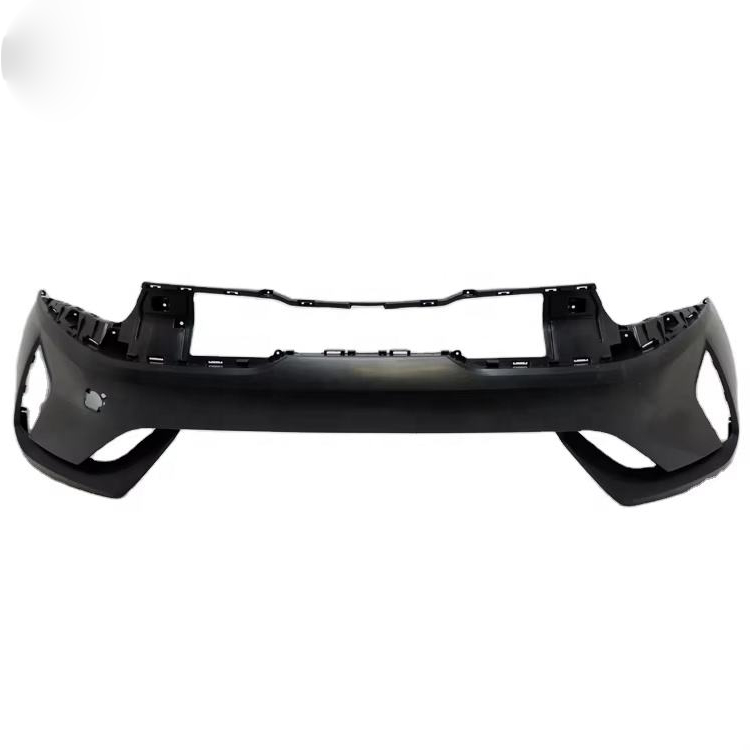
For global distributors serving collision repair networks in North America and Europe, acquiring parts that comply with regulatory frameworks is paramount. Utilizing CE-certified and EPR-compliant (such as Germany VerpackG) front bumpers guarantees that aftermarket replacements match original equipment manufacturer specifications. This technical compliance prevents fitment mismatches during physical installation and subsequent sensor calibration.
Data/Solution Comparison
| Feature / Parameter | Traditional Front Bumpers | Electric Vehicle (EV) Front Bumpers |
|---|---|---|
| Primary Aerodynamic Design | Open-grille configuration for engine cooling airflow | Closed, smooth aerodynamic surface to reduce drag |
| Sensor Integration (ADAS) | Minimal; typically limited to basic parking sensors | High integration of radar, LiDAR, and cameras |
| Material Composition | Standard PP or ABS plastics | High-grade PP, ABS, or lightweight Carbon Fiber |
| Wall Thickness Specifications | Variable, less critical for sensor signal flow | Strict 2.5 to 5.0 mm limits for signal transparency |
| Installation Methods | Direct Bolt-on / Clip-on | Direct Bolt-on / Clip-on with integrated sensor mounts |
Frequently Asked Questions (FAQ)
How do electric vehicle front bumpers affect ADAS sensor performance?
Electric vehicle front bumpers act as protective shields for ADAS sensors. Any variation in material thickness, paint layers, or structural composition can block or distort radar and ultrasonic signals. Bumpers must be manufactured with uniform wall thickness and tested for paint consistency to ensure sensor signals pass through accurately.
What materials are preferred for electric vehicle front bumpers?
High-grade Polypropylene (PP), Acrylonitrile Butadiene Styrene (ABS), and carbon fiber are preferred. These materials offer the optimal balance of lightweight properties, impact resistance, flexibility, and signal transparency necessary for electric vehicles.
Why is precise fitment critical for aftermarket EV front bumpers?
Since EV front bumpers house calibrated sensors, even minor physical misalignments can cause safety systems to malfunction. Using precise bolt-on or clip-on installation systems ensures that replacement parts align perfectly with factory mounting points, allowing accurate sensor recalibration.
Final Conclusion & Recommendations
As automotive designs transition toward electrification, purchasing and distribution channels must adapt by sourcing technologically compatible components. Distributors and collision repair shops require reliable manufacturers that offer flexible business models, such as integrated production and supply chain services with low minimum order quantities (MOQ of 5 pieces for front bumpers). Utilizing shipping methods like Sea Freight (FCL/LCL), Air Freight, or Railway Transport ensures efficient delivery of these bulky components. Flexible payment terms including T/T, D/P, L/C, and Alipay facilitate secure cross-border transactions, reducing procurement friction in the global automotive aftermarket. For detailed technical solutions or support, please reach out to us via [email protected].
About Us
Danyang Wanjiang Auto Parts Co., Ltd. is a professional exporter of auto body parts based in Jiangsu Province. Established in 2023, the enterprise operates a 10,000 sqm factory staffed by 80 employees, leveraging 18 years of industry experience to manufacture bumpers, grilles, and headlights. The company holds CE and EPR certifications, delivering high-quality aftermarket solutions to the American and European vehicle markets. Through dedicated OEM/ODM development and integrated logistics services, the company exports over 500 containers annually to global B2B clients.

Lastest
-
How are rising fuel costs impacting global LCL shipping trends?
2026-07-30 -
Is it possible to emboss our brand logo on vegetan leather?
2026-07-30 -
How does the supplier handle defective parts of a K-House?
2026-07-30 -
How do I choose the right laser light show wattage for a 5000-person outdoor venue?
2026-07-30 -
How do I verify the actual brightness of an RGB laser projector before buying bulk?
2026-07-30
SUBSCRIBE
INQUIRY