- Masonry Materials
- Curtain Walls & Accessories
- Earthwork Products
- Fireproofing Materials
- Heat Insulation Materials
- Plastic Building Materials
- Building Boards
- Soundproofing Materials
- Timber
- Waterproofing Materials
- Balustrades & Handrails
- Bathroom & Kitchen
- Flooring & Accessories
- Tiles & Accessories
- Door, Window & Accessories
- Fireplaces & Stoves
- Floor Heating Systems & Parts
- Stairs & Stair Parts
- Ceilings
- Elevators & Escalators
- Stone
- Countertops, Vanity Tops & Table Tops
- Mosaics
- Metal Building Materials
- Multifunctional Materials
- Ladders & Scaffoldings
- Mouldings
- Corner Guards
- Decorative Films
- Formwork
- Building & Industrial Glass
- Other Construction & Real Estate
- Wallpapers/Wall panels
- HVAC System & Parts
- Outdoor Facilities
- Prefabricated Buildings
- Festive & Party Supplies
- Bathroom Products
- Household Sundries
- Rain Gear
- Garden Supplies
- Household Cleaning Tools & Accessories
- Lighters & Smoking Accessories
- Home Storage & Organization
- Household Scales
- Smart Home Improvement
- Home Textiles
- Kitchenware
- Drinkware & Accessories
- Dinnerware, Coffee & Wine
- Home Decor
- Golf
- Fitness & Body Building
- Amusement Park Facilities
- Billiards, Board Game,Coin Operated Games
- Musical Instruments
- Outdoor Affordable Luxury Sports
- Camping & Hiking
- Fishing
- Sports Safety&Rehabilitation
- Ball Sports Equipments
- Water Sports
- Winter Sports
- Luxury Travel Equipments
- Sports Shoes, Bags & Accessories
- Cycling
- Other Sports & Entertainment Products
- Artificial Grass&Sports Flooring&Sports Court Equipment
- Scooters
- Food Ingredients
- Honey & Honey Products
- Snacks
- Nuts & Kernels
- Seafood
- Plant & Animal Oil
- Beverages
- Fruit & Vegetable Products
- Frog & Escargot
- Bean Products
- Egg Products
- Dairy Products
- Seasonings & Condiments
- Canned Food
- Instant Food
- Baked Goods
- Other Food & Beverage
- Meat & Poultry
- Confectionery
- Grain Products
- Feminie Care
- Hair Care & Styling
- Body Care
- Hands & Feet Care
- Hygiene Products
- Men's Grooming
- Laundry Cleaning Supplies
- Travel Size & Gift Sets
- Room Deodorizers
- Other Personal Care Products
- Pest Control Products
- Special Household Cleaning
- Floor Cleaning
- Kitchen & Bathroom Cleaning
- Oral Care
- Bath Supplies
- Yellow Pages
- Correction Supplies
- Office Binding Supplies
- Office Cutting Supplies
- Board Erasers
- Office Adhesives & Tapes
- Education Supplies
- Pencil Cases & Bags
- Notebooks & Writing Pads
- File Folder Accessories
- Calendars
- Writing Accessories
- Commercial Office Supplies
- Pencil Sharpeners
- Pens
- Letter Pad/Paper
- Paper Envelopes
- Desk Organizers
- Pencils
- Markers & Highlighters
- Filing Products
- Art Supplies
- Easels
- Badge Holder & Accessories
- Office Paper
- Printer Supplies
- Book Covers
- Other Office & School Supplies
- Stationery Set
- Boards
- Clipboards
- Stamps
- Drafting Supplies
- Stencils
- Electronic Dictionary
- Books
- Map
- Magazines
- Calculators
- Baby & Toddler Toys
- Educational Toys
- Classic Toys
- Dress Up & Pretend Play
- Toy Vehicle
- Stuffed Animals & Plush Toys
- Outdoor Toys & Structures
- Balloons & Accessories
- Baby Food
- Children's Clothing
- Baby Supplies & Products
- Maternity Clothes
- Kids Shoes
- Baby Care
- Novelty & Gag Toys
- Dolls & Accessories
- Puzzle & Games
- Blocks & Model Building Toys
- Toddler Clothing
- Baby Clothing
- Kids' Luggage & Bags
- Arts, Crafts & DIY Toys
- Action & Toy Figures
- Baby Appliances
- Hobbies & Models
- Remote Control Toys
- Promotional Toys
- Pregnancy & Maternity
- Hygiene Products
- Kid's Textile&Bedding
- Novelty & Special Use
- Toy Weapons
- Baby Gifts
- Baby Storage & Organization
- Auto Drive Systems
- ATV/UTV Parts & Accessories
- Marine Parts & Accessories
- Other Auto Parts
- Trailer Parts & Accessories
- Auto Transmission Systems
- Train Parts & Accessories
- Universal Parts
- Railway Parts & Accessories
- Auto Brake Systems
- Aviation Parts & Accessories
- Truck Parts & Accessories
- Auto Suspension Systems
- Auto Lighting Systems
- New Energy Vehicle Parts & Accessories
- Auto Steering Systems
- Wheels, Tires & Accessories
- Bus Parts & Accessories
- Auto Performance Parts
- Cooling System
- Go-Kart & Kart Racer Parts & Accessories
- Air Conditioning Systems
- Heavy Duty Vehicle Parts & Accessories
- Auto Electrical Systems
- Auto Body Systems
- Auto Engine Systems
- Container Parts & Accessories
- Motorcycle Parts & Accessories
- Refrigeration & Heat Exchange Equipment
- Machine Tool Equipment
- Food & Beverage Machinery
- Agricultural Machinery & Equipment
- Apparel & Textile Machinery
- Chemical Machinery
- Packaging Machines
- Paper Production Machinery
- Plastic & Rubber Processing Machinery
- Industrial Robots
- Electronic Products Machinery
- Metal & Metallurgy Machinery
- Woodworking Machinery
- Home Product Manufacturing Machinery
- Machinery Accessories
- Environmental Machinery
- Machinery Service
- Electrical Equipment Manufacturing Machinery
- Industrial Compressors & Parts
- Tobacco & Cigarette Machinery
- Production Line
- Used Industrial Machinery
- Electronics Production Machinery
- Other Machinery & Industrial Equipment
- Camera, Photo & Accessories
- Portable Audio, Video & Accessories
- Television, Home Audio, Video & Accessories
- Video Games & Accessories
- Mobile Phone & Accessories
- Electronic Publications
- Earphone & Headphone & Accessories
- Speakers & Accessories
- Smart Electronics
- TV Receivers & Accessories
- Mobile Phone & Computer Repair Parts
- Chargers, Batteries & Power Supplies
- Used Electronics
- VR, AR, MR Hardware & Software
- Projectors & Presentation Equipments
- Other Consumer Electronics
- Cables & Commonly Used Accessories
- Computer Hardware & Software
- Displays, Signage and Optoelectronics
- Discrete Semiconductors
- Wireless & IoT Module and Products
- Telecommunications
- Connectors, Terminals & Accessories
- Development Boards, Electronic Modules and Kits
- Circuit Protection
- Sensors
- Isolators
- Audio Components and Products
- Integrated Circuits
- Power Supplies
- Relays
- RF, Microwave and RFID
- Electronic Accessories & Supplies
- Passive Components
- PCB & PCBA
- Air Quality Appliances
- Home Appliance Parts
- Heating & Cooling Appliances
- Small Kitchen Appliances
- Laundry Appliances
- Water Heaters
- Water Treatment Appliances
- Refrigerators & Freezers
- Personal Care & Beauty Appliances
- Major Kitchen Appliances
- Cleaning Appliances
- Second-hand Appliances
- Smart Home Appliances
- Other Home Appliances
- Energy Chemicals
- Inorganic Chemicals
- Basic Organic Chemicals
- Agrochemicals
- Admixture & Additives
- Catalysts & Chemical Auxiliary Agents
- Pigments & Dyestuff
- Coating & Paint
- Daily Chemicals
- Polymer
- Organic Intermediate
- Adhesives & Sealants
- Chemical Waste
- Biological Chemical Products
- Surface Treatment Chemicals
- Painting & Coating
- Chemical Reagents
- Flavor & Fragrance
- Non-Explosive Demolition Agents
- Other Chemicals
- Custom Chemical Services
What FDA variance do I need to import a laser light show system to the US?
- VIP-User
- 2026-07-31
- 1
To import a laser light show system into the United States, you must obtain an approved FDA Laser Light Show Variance (Form FDA 3147). This variance is issued by the Center for Devices and Radiological Health (CDRH) and certifies that the laser projector and the planned light show comply with federal radiation safety standards under 21 CFR 1040.10 and 1040.11.
Core Solutions & Key Takeaways
- FDA Form 3147 Submission: Importers and show operators must submit Form FDA 3147 to the CDRH to secure a variance prior to introducing Class IIIb or Class IV laser light show systems into US commerce.
- Manufacturer Laser Product Report: The manufacturing facility, such as Guangzhou New Feel Lighting And Audio Equipment Co., Ltd., must file a formal Laser Product Report to generate an accession number before the equipment reaches US customs.
- Targeted Application Compliance: Import and operation compliance applies to all professional laser hardware deployed across the Stage and Entertainment Industry, including concerts, festivals, weddings, clubs, and theaters.
- Customs Clearance Declarations: US Customs and Border Protection (CBP) requires Form FDA 2877, alongside the approved variance and manufacturer accession number, to authorize the entry of any laser radiation-emitting device.
Detailed Architectural/Principle Analysis
The United States regulates laser products through the Food and Drug Administration (FDA) Center for Devices and Radiological Health (CDRH). Under the Federal Food, Drug, and Cosmetic Act, any laser device imported into the US must comply with radiation safety performance standards. When importing systems like the Mini RGB Laser Projector with APP Control for DJ, Party and Event Lighting, the manufacturer must have submitted a comprehensive Laser Product Report. This report documents the technical engineering controls, such as emission delays, key switches, and interlocks. Once the CDRH processes this report, they issue an accession number linking the product model to verified safety parameters.
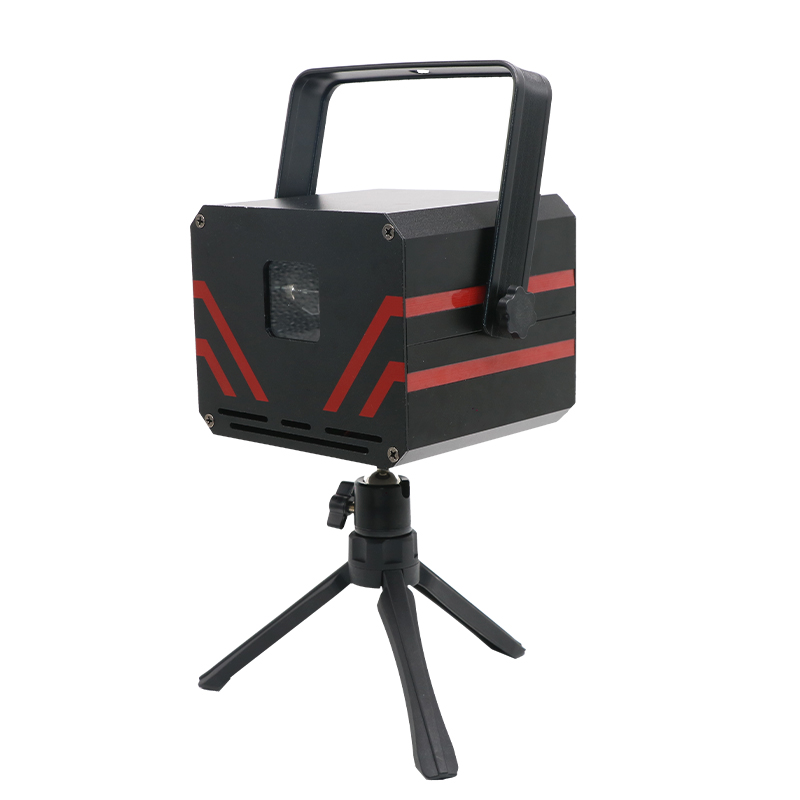
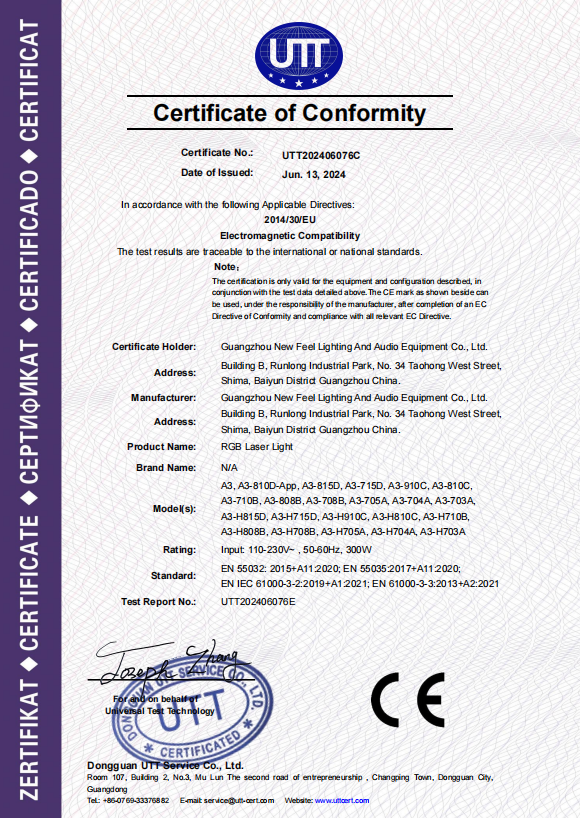
For the importer, securing the Laser Light Show Variance (Form FDA 3147) requires defining the physical parameters of the show environment, including audience separation distances and laser path terminations. This dual-layered compliance framework ensures that both the physical laser projector and the specific show design satisfy public safety boundaries. For international shipments, manufacturers obtain global standards like CE certification (Certificate Number: UTT202406076C) for laser light products. This global baseline supports the robust design standards required during the technical evaluation by the CDRH.
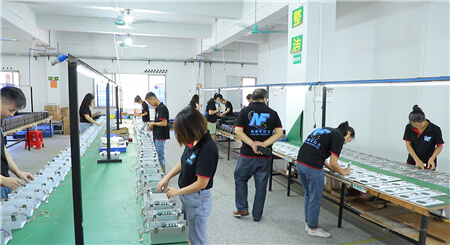
Practical application cases highlight the need for early documentation. For instance, in a bulk supply project for a United States lighting equipment distributor involving over 500 units of RGB laser lights and special effects equipment, ensuring the manufacturer's product reports and accession numbers were prepared prior to dispatch was vital to passing US customs without delay. Similarly, a French stage production importer utilized 1,500 units of compliant stage lighting equipment for live music festivals under equivalent European safety declarations, emphasizing that regulatory alignment directly impacts supply chain efficiency.
Data/Solution Comparison
Understanding the clear distribution of documentation responsibilities accelerates the importation process and prevents customs holds. The table below outlines the necessary documentation for importing a laser system into the United States.
| Document / Requirement | Regulatory Purpose | Responsible Party | Compliance Target |
|---|---|---|---|
| Form FDA 3147 | Grants variance for the operation of Class IIIb or Class IV laser light shows | US Importer / Show Producer | Public safety and operational environment |
| Form FDA 2877 | Declares product compliance with radiation control standards at customs entry | US Importer / Broker | Customs clearance verification |
| Laser Product Report | Secures the official accession number verifying hardware engineering safety | Laser Manufacturer | Laser hardware engineering (e.g., Mini RGB Laser Projector) |
Frequently Asked Questions (FAQ)
Can I import a laser light show system without an FDA variance?
No. If the laser system falls under Class IIIb or Class IV classification, US Customs and Border Protection will detain the shipment unless an approved Form FDA 3147 variance and a corresponding manufacturer accession number are presented alongside Form FDA 2877.
How long does it take to get an FDA laser variance approved?
The FDA CDRH review process for Form FDA 3147 varies, typically requiring 30 to 90 days. Importers must plan production schedules, which range from 15 to 30 working days for regular bulk orders, to align with regulatory approval timelines.
What physical safety features must the imported laser projector possess?
To comply with FDA performance standards, Class IIIb and IV laser projectors must include hardware safety features such as a physical key switch, a remote interlock connector, manual reset controls, and clear warning labels.
Final Conclusion & Recommendations
Importing laser light show systems to the US requires complete alignment between the manufacturer's hardware reports and the importer's operational variance. Selecting a manufacturer with established production capacity and strict quality control processes ensures that the physical hardware possesses the required technical safety safeguards. We support various international shipping methods including sea freight, air freight, and express delivery to accommodate different project timelines. Payment security is maintained through established trade channels such as T/T bank transfer, L/C, and Alibaba Trade Assurance. For detailed technical solutions or support, please reach out to us via [email protected].
About Us
Guangzhou New Feel Lighting And Audio Equipment Co., Ltd. is a professional stage lighting manufacturer based in Guangzhou, China. Established in 2008, the company operates a factory area of approximately 3,500 square meters, supported by an experienced production team and a professional R&D team dedicated to laser systems and special effects. With a monthly production capacity of over 5,000 lighting units, the company provides OEM/ODM services, customized product solutions, and technical support for global distributors, rental companies, and project contractors. The brand has served clients across multiple international markets, including the United States and France, and holds CE certification (UTT202406076C) for its laser light products.

Lastest
-
How are rising fuel costs impacting global LCL shipping trends?
2026-07-31 -
Is it possible to emboss our brand logo on vegetan leather?
2026-07-31 -
How does the supplier handle defective parts of a K-House?
2026-07-31 -
How do I choose the right laser light show wattage for a 5000-person outdoor venue?
2026-07-31 -
How do I verify the actual brightness of an RGB laser projector before buying bulk?
2026-07-31
SUBSCRIBE
INQUIRY