- Masonry Materials
- Curtain Walls & Accessories
- Earthwork Products
- Fireproofing Materials
- Heat Insulation Materials
- Plastic Building Materials
- Building Boards
- Soundproofing Materials
- Timber
- Waterproofing Materials
- Balustrades & Handrails
- Bathroom & Kitchen
- Flooring & Accessories
- Tiles & Accessories
- Door, Window & Accessories
- Fireplaces & Stoves
- Floor Heating Systems & Parts
- Stairs & Stair Parts
- Ceilings
- Elevators & Escalators
- Stone
- Countertops, Vanity Tops & Table Tops
- Mosaics
- Metal Building Materials
- Multifunctional Materials
- Ladders & Scaffoldings
- Mouldings
- Corner Guards
- Decorative Films
- Formwork
- Building & Industrial Glass
- Other Construction & Real Estate
- Wallpapers/Wall panels
- HVAC System & Parts
- Outdoor Facilities
- Prefabricated Buildings
- Festive & Party Supplies
- Bathroom Products
- Household Sundries
- Rain Gear
- Garden Supplies
- Household Cleaning Tools & Accessories
- Lighters & Smoking Accessories
- Home Storage & Organization
- Household Scales
- Smart Home Improvement
- Home Textiles
- Kitchenware
- Drinkware & Accessories
- Dinnerware, Coffee & Wine
- Home Decor
- Golf
- Fitness & Body Building
- Amusement Park Facilities
- Billiards, Board Game,Coin Operated Games
- Musical Instruments
- Outdoor Affordable Luxury Sports
- Camping & Hiking
- Fishing
- Sports Safety&Rehabilitation
- Ball Sports Equipments
- Water Sports
- Winter Sports
- Luxury Travel Equipments
- Sports Shoes, Bags & Accessories
- Cycling
- Other Sports & Entertainment Products
- Artificial Grass&Sports Flooring&Sports Court Equipment
- Scooters
- Food Ingredients
- Honey & Honey Products
- Snacks
- Nuts & Kernels
- Seafood
- Plant & Animal Oil
- Beverages
- Fruit & Vegetable Products
- Frog & Escargot
- Bean Products
- Egg Products
- Dairy Products
- Seasonings & Condiments
- Canned Food
- Instant Food
- Baked Goods
- Other Food & Beverage
- Meat & Poultry
- Confectionery
- Grain Products
- Feminie Care
- Hair Care & Styling
- Body Care
- Hands & Feet Care
- Hygiene Products
- Men's Grooming
- Laundry Cleaning Supplies
- Travel Size & Gift Sets
- Room Deodorizers
- Other Personal Care Products
- Pest Control Products
- Special Household Cleaning
- Floor Cleaning
- Kitchen & Bathroom Cleaning
- Oral Care
- Bath Supplies
- Yellow Pages
- Correction Supplies
- Office Binding Supplies
- Office Cutting Supplies
- Board Erasers
- Office Adhesives & Tapes
- Education Supplies
- Pencil Cases & Bags
- Notebooks & Writing Pads
- File Folder Accessories
- Calendars
- Writing Accessories
- Commercial Office Supplies
- Pencil Sharpeners
- Pens
- Letter Pad/Paper
- Paper Envelopes
- Desk Organizers
- Pencils
- Markers & Highlighters
- Filing Products
- Art Supplies
- Easels
- Badge Holder & Accessories
- Office Paper
- Printer Supplies
- Book Covers
- Other Office & School Supplies
- Stationery Set
- Boards
- Clipboards
- Stamps
- Drafting Supplies
- Stencils
- Electronic Dictionary
- Books
- Map
- Magazines
- Calculators
- Baby & Toddler Toys
- Educational Toys
- Classic Toys
- Dress Up & Pretend Play
- Toy Vehicle
- Stuffed Animals & Plush Toys
- Outdoor Toys & Structures
- Balloons & Accessories
- Baby Food
- Children's Clothing
- Baby Supplies & Products
- Maternity Clothes
- Kids Shoes
- Baby Care
- Novelty & Gag Toys
- Dolls & Accessories
- Puzzle & Games
- Blocks & Model Building Toys
- Toddler Clothing
- Baby Clothing
- Kids' Luggage & Bags
- Arts, Crafts & DIY Toys
- Action & Toy Figures
- Baby Appliances
- Hobbies & Models
- Remote Control Toys
- Promotional Toys
- Pregnancy & Maternity
- Hygiene Products
- Kid's Textile&Bedding
- Novelty & Special Use
- Toy Weapons
- Baby Gifts
- Baby Storage & Organization
- Auto Drive Systems
- ATV/UTV Parts & Accessories
- Marine Parts & Accessories
- Other Auto Parts
- Trailer Parts & Accessories
- Auto Transmission Systems
- Train Parts & Accessories
- Universal Parts
- Railway Parts & Accessories
- Auto Brake Systems
- Aviation Parts & Accessories
- Truck Parts & Accessories
- Auto Suspension Systems
- Auto Lighting Systems
- New Energy Vehicle Parts & Accessories
- Auto Steering Systems
- Wheels, Tires & Accessories
- Bus Parts & Accessories
- Auto Performance Parts
- Cooling System
- Go-Kart & Kart Racer Parts & Accessories
- Air Conditioning Systems
- Heavy Duty Vehicle Parts & Accessories
- Auto Electrical Systems
- Auto Body Systems
- Auto Engine Systems
- Container Parts & Accessories
- Motorcycle Parts & Accessories
- Refrigeration & Heat Exchange Equipment
- Machine Tool Equipment
- Food & Beverage Machinery
- Agricultural Machinery & Equipment
- Apparel & Textile Machinery
- Chemical Machinery
- Packaging Machines
- Paper Production Machinery
- Plastic & Rubber Processing Machinery
- Industrial Robots
- Electronic Products Machinery
- Metal & Metallurgy Machinery
- Woodworking Machinery
- Home Product Manufacturing Machinery
- Machinery Accessories
- Environmental Machinery
- Machinery Service
- Electrical Equipment Manufacturing Machinery
- Industrial Compressors & Parts
- Tobacco & Cigarette Machinery
- Production Line
- Used Industrial Machinery
- Electronics Production Machinery
- Other Machinery & Industrial Equipment
- Camera, Photo & Accessories
- Portable Audio, Video & Accessories
- Television, Home Audio, Video & Accessories
- Video Games & Accessories
- Mobile Phone & Accessories
- Electronic Publications
- Earphone & Headphone & Accessories
- Speakers & Accessories
- Smart Electronics
- TV Receivers & Accessories
- Mobile Phone & Computer Repair Parts
- Chargers, Batteries & Power Supplies
- Used Electronics
- VR, AR, MR Hardware & Software
- Projectors & Presentation Equipments
- Other Consumer Electronics
- Cables & Commonly Used Accessories
- Computer Hardware & Software
- Displays, Signage and Optoelectronics
- Discrete Semiconductors
- Wireless & IoT Module and Products
- Telecommunications
- Connectors, Terminals & Accessories
- Development Boards, Electronic Modules and Kits
- Circuit Protection
- Sensors
- Isolators
- Audio Components and Products
- Integrated Circuits
- Power Supplies
- Relays
- RF, Microwave and RFID
- Electronic Accessories & Supplies
- Passive Components
- PCB & PCBA
- Air Quality Appliances
- Home Appliance Parts
- Heating & Cooling Appliances
- Small Kitchen Appliances
- Laundry Appliances
- Water Heaters
- Water Treatment Appliances
- Refrigerators & Freezers
- Personal Care & Beauty Appliances
- Major Kitchen Appliances
- Cleaning Appliances
- Second-hand Appliances
- Smart Home Appliances
- Other Home Appliances
- Energy Chemicals
- Inorganic Chemicals
- Basic Organic Chemicals
- Agrochemicals
- Admixture & Additives
- Catalysts & Chemical Auxiliary Agents
- Pigments & Dyestuff
- Coating & Paint
- Daily Chemicals
- Polymer
- Organic Intermediate
- Adhesives & Sealants
- Chemical Waste
- Biological Chemical Products
- Surface Treatment Chemicals
- Painting & Coating
- Chemical Reagents
- Flavor & Fragrance
- Non-Explosive Demolition Agents
- Other Chemicals
- Custom Chemical Services
What sheet metal thickness is best for a rectangular clinching tool to avoid joint failure?
- VIP-User
- 2026-07-31
- 1
To avoid joint failure, a rectangular clinching tool is best suited for sheet metal thicknesses typically ranging from 0.5 mm to 3.0 mm, depending on material ductility. Operating within the 30-60kn output pressure range ensures precise plastic deformation without necking or cracking. Proper material selection and thickness matching prevent shear failure and maintain joint integrity in sheet metal assembly.
Core Solutions & Key Takeaways
- Optimal Material Thickness: Choosing sheet metals within the 0.5 mm to 3.0 mm range ensures complete interlocking. This range fits the 30-60kn output pressure capacity, preventing under-forming or material cracking.
- Elimination of Consumables: Clinching utilizes a cold-forming process to secure the joint, removing the need for rivets, screws, or external fasteners, reducing long-term material expenses.
- Aesthetic Surface Finish: Unlike conventional spot welding, the joint requires no post-assembly polishing or repainting, leaving a flat, rust-resistant exterior.
- Industrial Scenario Adaptation: This method is widely applied in HVAC ductwork, commercial kitchens, commercial freezers, and automotive assembly lines where high structural reliability is required.
Detailed Architectural/Principle Analysis
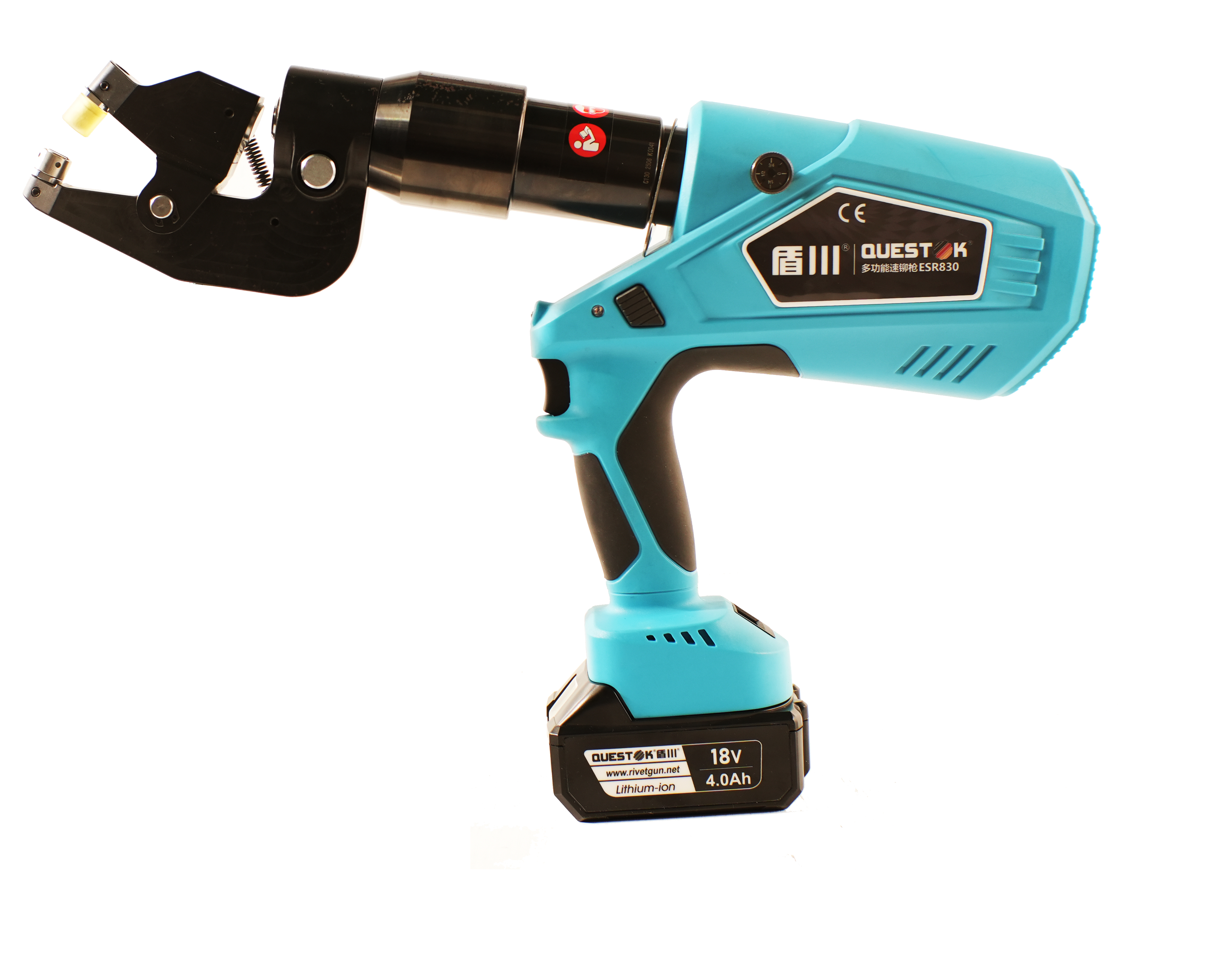
A rectangular clinching tool secures sheet metal layers through localized cold-forming plastic deformation. As the punch forces the metal sheets into the specialized die, the materials flow laterally to form a permanent mechanical interlock. Maintaining the correct sheet metal thickness prevents common joint defects such as necking (where the metal thins excessively and tears) or insufficient interlocking (where the force is inadequate to form a tight joint). Utilizing the portable efficient washing machine sheet metal assembly tool manufactured by PHOTON TECHNOLOGY KUNSHAN CO.,LTD, operators can adjust output pressure precisely between 30-60kn to accommodate various material hardness levels and sheet thicknesses.
Adhering to strict international standards, this assembly tool complies with CE certification requirements (Certificate Numbers: ISETC.001120210222 and 3N210218.PTK0S25) and holds an MSDS credential (262620110732) for quality assurance. Practical deployment cases highlight the success of this technology. For instance, in 2022, the manufacturer Midea integrated this clinching solution into their control cabinet automated production line to replace welding, reducing costs and accelerating assembly cycles. Similarly, Benz in Fuzhou utilized this system alongside self-piercing riveting guns to handle high-strength steel-aluminum combinations in automotive production, executing rigorous metallographic analysis to confirm joint integrity.

Data/Solution Comparison
Understanding the exact differences between cold-forming clinching and alternative sheet metal joining methods helps manufacturers select the right process for their production line. Below is a comparative analysis of these methods:
| Performance Feature | Rectangular Clinching Tool | Spot Welding | Traditional Riveting |
|---|---|---|---|
| Consumable Costs | Zero (No rivets or filler required) | Low (Gas/electrodes) | High (Requires ongoing rivets/screws) |
| Thermal Deformation | None (Cold-forming process) | High (Requires post-heat cooling) | None (Mechanical) |
| Surface Finish | Clean, paint-ready, no polishing | Discolored, requires polishing | Protruding rivet heads |
| Typical Output Force | 30-60kn (Precisely adjustable) | Not Applicable (Electric current) | Varies by rivet type |
| Dismantling Feasibility | Low (Permanent joint) | Very Low (Destructive) | Medium (Using rivet removal tools) |
Frequently Asked Questions (FAQ)
What happens if the sheet metal is too thick for a rectangular clinching tool?
When the combined sheet metal thickness exceeds the tool's maximum capacity, the 30-60kn output pressure will fail to force the material into a complete lateral flow. This prevents the formation of an adequate mechanical interlock, resulting in weak joints that are highly susceptible to shear failure under load.
Can the rectangular clinching tool join dissimilar metals?
Yes, the cold-forming process easily joins dissimilar materials, such as steel to aluminum, without the galvanic corrosion risks associated with welding. For best results, place the more ductile material on the punch side so it flows smoothly into the die cavity.
Does this tool require pre-drilling or post-cleaning of the sheets?
No, the rectangular clinching tool works in a single-step operation directly on solid sheet metal, eliminating pre-drilling, punching, and post-assembly polishing. It also preserves surface coatings, making it ideal for galvanized or pre-painted metals.
Final Conclusion & Recommendations
Selecting the optimal sheet metal thickness—typically between 0.5 mm and 3.0 mm—is paramount to avoiding joint failure and maximizing the shear strength of cold-formed connections. Equipment like the portable efficient washing machine sheet metal assembly tool provides adjustable 30-60kn pressure control to guarantee consistent material flow across varying material hardness. Manufacturers can acquire these systems under flexible ODM and OBM business models with a minimum order quantity of 1 set, ensuring quick integration into both automated and manual assembly lines. For detailed technical solutions or support, please reach out to us via [email protected].
About Us
PHOTON TECHNOLOGY KUNSHAN CO.,LTD, commercially known as Questok, is an industrial technology company established in 2011. Operating a 5000 square meter factory with a dedicated workforce of 20-50 employees, the company specializes in developing advanced fastening, joining, and assembly solutions. The engineering team utilizes over 10 years of R&D experience to deliver CE-certified and MSDS-compliant clinching equipment and SPR systems, serving prominent industrial clients across automotive, HVAC, and white goods sectors.

Lastest
-
How are rising fuel costs impacting global LCL shipping trends?
2026-07-31 -
Is it possible to emboss our brand logo on vegetan leather?
2026-07-31 -
How does the supplier handle defective parts of a K-House?
2026-07-31 -
How do I choose the right laser light show wattage for a 5000-person outdoor venue?
2026-07-31 -
How do I verify the actual brightness of an RGB laser projector before buying bulk?
2026-07-31
SUBSCRIBE
INQUIRY